this post was submitted on 03 Apr 2026
1037 points (99.4% liked)
Space
2330 readers
69 users here now
A community to discuss space & astronomy through a STEM lens
Rules
- Be respectful and inclusive. This means no harassment, hate speech, or trolling.
- Engage in constructive discussions by discussing in good faith.
- Foster a continuous learning environment.
Also keep in mind, mander.xyz's rules on politics
Please keep politics to a minimum. When science is the focus, intersection with politics may be tolerated as long as the discussion is constructive and science remains the focus. As a general rule, political content posted directly to the instance’s local communities is discouraged and may be removed. You can of course engage in political discussions in non-local communities.
Related Communities
🔭 Science
- !curiosityrover@lemmy.world
- !earthscience@mander.xyz
- !esa@feddit.nl
- !nasa@lemmy.world
- !perseverancerover@lemmy.world
- !physics@mander.xyz
- !space@beehaw.org
🚀 Engineering
🌌 Art and Photography
Other Cool Links
founded 3 years ago
MODERATORS
you are viewing a single comment's thread
view the rest of the comments
view the rest of the comments
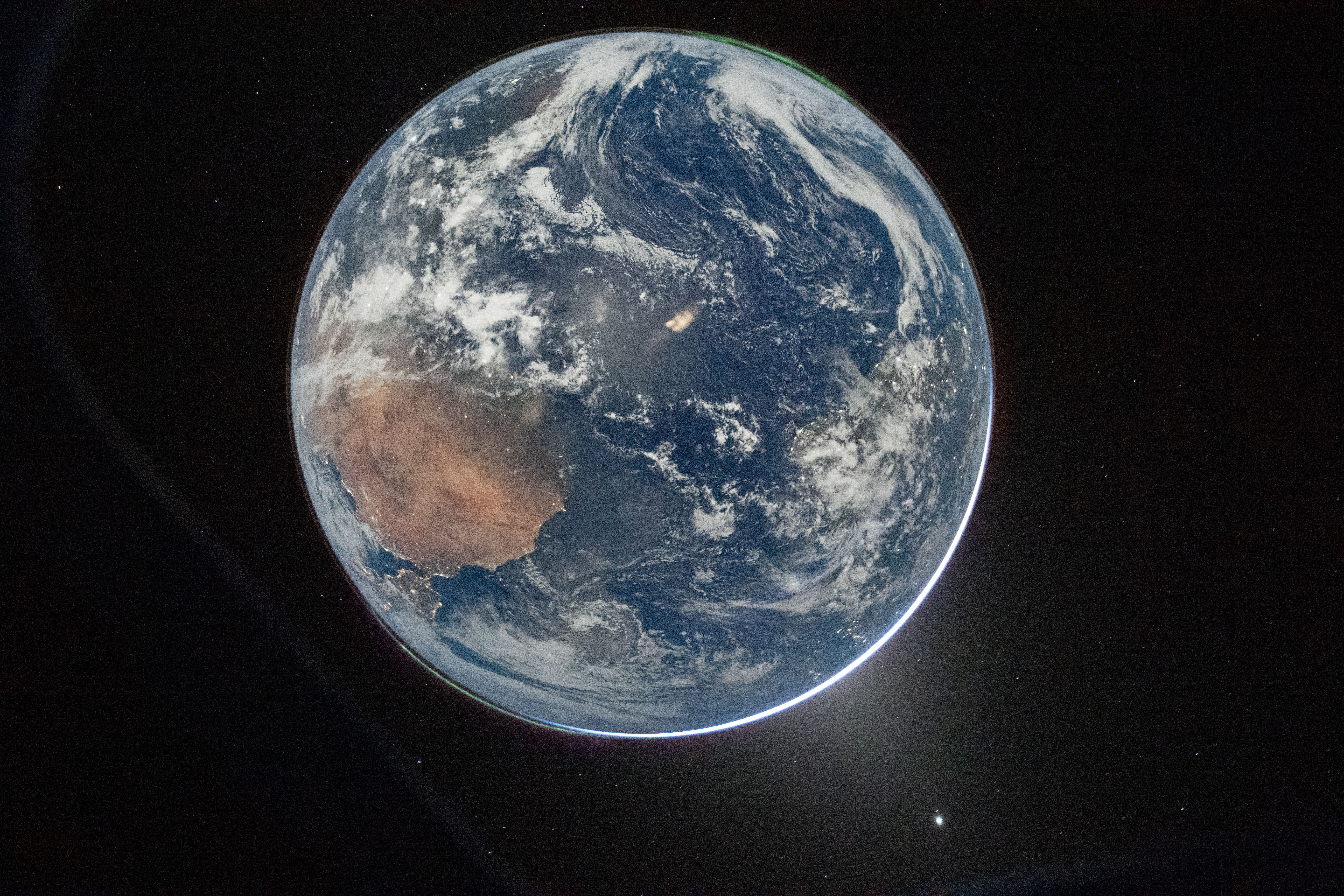
Anyone know if the grain is due to radiation or just ISO?
This is on the night side of Earth, so lit only by moonlight. It’s grain from ~~long exposure~~ high ISO - thanks for the correction.
Wouldn't a long exposure have less grain? Usually it's short exposure and high ISO that results in grain.
Less grain than a shorter exposure? Absolutely. Due to motion you still have to cap exposure duration to a somewhat small number or you'll start getting light streaking. It would be very interesting to see the exif information for this photo.
It is there:
Thanks! I should have looked.
ISO 51,200 is pretty high, which is why there's the grain/noise. I wonder if whomever took the photo also tried with a somewhat longer shutter speed and/or wider aperture. Both would reduce ISO and thus noise but come with trade-offs. Longer shutter speed can result in light streaks due to motion and a wider aperture will give less depth of field.
it is the high iso that produces the visible grain.
long exposure time would have less grain, but to use it, you need for the scene to not move long enough.
the movement and subsequent blurred image is introduced by two different things. either the scene itself is moving, or it is the camera that is moving (your shaky hand, or the spaceship doing 20000+ km/h.
if the scene is not moving and you can use tripod to stabilize the camera movement, then you can use long exposure time and however low iso you want.
if this is impossible, because tripod in a spaceship would still not help shaking the camera relative to phographed object that is outside of the spaceship, then short exposure time (and high iso to compensate for that) is your only choice. (and still, even with the super high iso, it still was 1/4s. i suspect some stabilization in the lens.)
https://digital-photography.com/camera/aperture-exposure-time-iso-understanding.php
They're in a moving spacecraft taking a shot of a rotating object. You can't do too long of an exposure. It's why astrophotographers either have to take lots of individual photos and stack them.
Thanks!
Ohhh. This makes more sense. I was wondering where all the light was coming from.
Oooh it's the night side??? That makes a lot more sense, but I'll still leave my other comment up for info.
They left the EXIF data in the file, you can see the huge ISO. Really interesting lens also.
EDIT: I've now seen this is actually the night side, so it checks out.
This is full of interesting but slightly puzzling information.
First, it's shot at 22mm, which is a pretty wide angle, so I guess they were still pretty close when they took it.
What's really puzzling to me though, is why did they need to crank up the exposure so much?
We're looking at 51k ISO @ f4, I can shoot in really dark places with this kind of ISO (but I don't, because it looks like trash).
They seem to be shooting the day side of earth as far as I can tell, so I don't really understand why they needed that much sensitivity, instinctively I would've assumed you'd only need the same kind of settings you'd use on daytime exteriors here on earth (so nowhere near that ISO).
It looks like the daytime side because the ISO is cranked up that high.
This is the nighttime side, only lit by reflected moonlight. The sun is behind earth on the bottom right.
They wanted to fire off that first shot as soon as all of earth fit in the window, instead of waiting 12 hours.
Yeah I realized that afterwards. At the end of the day moonlight is basically just sunlight but dimmer (also something you learn when trying to shoot night scenes), that's why we can shoot "day for night" and it looks mostly correct.