Animals

363 readers
152 users here now

Anything and everything about non-human animals.

Rules:

  1. Posts should be relevant to non-human animals, including articles (news or just interesting facts), pictures (OC only but the animals need not be your pets), or text posts.
  2. Keep things civil. Don't insult other users or their pets. Do not post content that promotes animal abuse (this does not include content, like news, that portrays abuse in a negative light).
  3. Follow site-wide rules

founded 2 years ago
MODERATORS
1


From South African Wildlife Rehab Center

Whilst most sensible people were contemplating a second cup of coffee yesterday morning (and possibly arguing with the snooze button), Anton and Tarien Schoultz were already zooting down the road on an approximate 80km round trip for a mission that was just a little more...

spotty.

Their assignment ...

Retrieve one very small, thoroughly unimpressed Serval kitten!

The youngster had been discovered after a devastating veld fire stripped the surrounding area bare, leaving him completely exposed, with nowhere to hide and no mom or siblings anywhere in sight.

Thankfully, a kind hearted petrol attendant had secured the frightened little survivor and taken him to the garage owner, who immediately phoned Judy for help.

Judy wasted no time calling Anton and Tarien, and off they went faster than you can say... "That's definitely not somebody's tabby cat!"

When they arrived, the very proud attendant carefully presented his precious find... (who was delivering an Oscar worthy performance entitled:

"If I Become One With This Cardboard Box, Perhaps The Humans Will Forget I Exist)."

It was an admirable effort.

Unfortunately, those enormous satellite dishes attached to his head (also known as ears) rather ruined the illusion.

The jig, as they say, was up.

The delighted attendant then cheekily asked Anton whether there might perhaps be a "rescue fee" for finding the kitten.

Anton explained (with a smile,) that paying for rescued wildlife (even as a thank you) would place everyone on the wrong side of wildlife trade legislation.

Considering Servals are a Threatened or Protected Species (TOPS), that's a slippery slope none of us want to slide down.

Thankfully, the little spotted passenger was happily surrendered into the safe hands of Anton without much fuss.

This morning the kitten is off to visit Dr Garith Newby at Selpark Veterinary Clinic for a thorough nose to tail inspection.

Our biggest concern is that the intense heat from the fire may have left his eyes dry and irritated, so he'll be getting the VIP treatment.

As for the kitten...

He has already worked out how this rescue thing operates...

Toasty warm blankets.. A full tummy...

Plenty of places to disappear beneath fluffy bedding... Humans who appear to believe that 2 a.m. bottle feeds are perfectly normal!

He's settling in beautifully.

Even more exciting... in the coming weeks he'll be introduced to Mufasa, the young Serval who arrived in our care after surviving a poaching incident earlier in June.

We're quietly hoping this might just be the beginning of a lifelong friendship!

To the petrol attendant who cared enough to help.. To the garage owner who immediately picked up the phone doing exactly the right thing..

And particularly to Anton and Tarien, who dropped everything, jumped in their vehicle and hit the road without hesitation...

Thank you!

Yesterday you changed the course of one tiny life, and we couldn't be more grateful!

Now, if you'll excuse us...

We have one tiny spotted hot water bottle to look after...

(who seems to be under the rather adorable impression that veterinary bills, milk formula and midnight feeds are all complimentary)!

We're still trying to figure out how to explain invoices to a Serval.

2


From Texas Parks and Wildlife / Alayna Alvarez

As I saunter down a rocky hiking trail at San Marcos’ Purgatory Creek Natural Area, a swish of what looks like the long, bushy tail of a Madagascan ring-tailed lemur catches my eye from a bed of sand-colored rocks some 200 feet away, stopping me right in my tracks.

“What is that?” I gasp, entirely convinced I have just discovered a lemur on the loose.

As the black-and-white tail continues to flick, I search for what should be the rest of the lemur’s gray body and signature yellow-orange eyes.

But the suspected escapee suddenly lifts up its head and meets my bewildered gaze with gigantic but dark, round eyes. I notice its large, upright ears and tan, narrow body and realize this wickedly cute creature is not what I thought it was. One thing I am sure of, though: I know I’ve never seen it before.

Most Texans haven’t, as it turns out. The few who have seen it may have also mistaken this critter for a lemur on the run, just as I did, or a funky-looking raccoon.

Commonly known as a ringtail cat (Bassariscus astutus), this slender, cat-sized carnivore is surprisingly not a cat at all, but actually closely related to raccoons and coatis. The name “ringtail” comes from the seven or eight black rings on its tail. The animals are also referred to as miner’s cats (historically valued for hunting mice in mines), civet cats (because their musky secretion resembles the smell produced by African civet cats) and cacomistles (derived from an Aztec Nahuatl term that means “half mountain lion”).

Weighing in at three or so pounds, with an acute sense of hearing and exceptional night vision, this Texas native’s commonly mistaken identity is due in large part to its predominantly nocturnal lifestyle and shy, elusive nature. Ringtails are also expert at climbing, capable of crawling into almost any cranny and crevice or clinging to a cliff, no matter how steep. They are also impressively quick at running, skilled at jumping and particularly acrobatic in trees.

Despite their rare appearances, ringtails range throughout most of the state, more commonly so in their preferred rocky habitats, such as the Trans-Pecos, Edwards Plateau and Cross Timbers regions of western and Central Texas. Studies show that ringtails play an integral role in the Trans-Pecos ecosystem by providing food for large predators (such as owls or other raptors known to capture ringtails that rise too early or go to sleep too late), affecting arthropod and small mammal populations and aiding in seed dispersal by eating an omnivorous diet.

“My” ringtail finished up its foraging and slipped away seamlessly into a dark, tucked-away den.

As an Arizona newspaper once put it, sporting “Bette Davis eyes, Yoda ears and Greta Garbo’s aloofness,” ringtails exude features reminiscent of all sorts of creatures but manifest them into something that is entirely unique and rarely sighted.

Ringtail facts:

Smaller than a house cat

Native to the US southwest and Mexico, state mammal of Arizona

Nocturnal and change their resting place every 2-3 days to avoid being found

Kits cannot open their eyes for more than 3 weeks and aren't weened until 8-10 weeks old, so the mother has to move all the babies around with her as she changes spots every few days.

People used to try to domesticate them for rodent control. Over-trapping for fur led to them becoming protected.

3


Meet the coatimundi (kuh-waa-tee-muhn-dee), also called the coati.

This cousin of our beloved raccoons is a very near creature in itself. They are found from the southern US down through South America.

Adult coatis measure 33 to 69 cm (1-2.5 ft) from head to the base of the tail and weigh between 2 and 8 kg (5-10 lbs). Their tail can be almost as long as they are, and is often kept held up in the air so other coati can know where each other are in tall grass.

Their snouts can rotate up to 60° in any direction to search for food, and they are one of the few mammals that can climb down trees headfirst thanks to their crazy ankles that can rotate just over 180°. Very flexible indeed!

Unlike raccoons, these cute critters are diurnal, so we are able to enjoy their company during the day.

For more coati facts, check out this article.

4


Se necesitaron 14 personas para lograr trasladar al animal desde la cumbre del Ben Nevis (1.345 metros de altura) hasta un hospital veterinario

5


From Steve Gettle

"Bedazzled" - Ebony Jewelwing Damselfly - I just Love mornings when we get a heavy dew like this. This Damselfly is beautiful of course but the real star of this show is the heavy dew!

When it is below about 60 degrees insects are in a state of torpor and cannot move well. But this guy still manages to move one leg enough to wipe the dew from its eye so it can keep that eye on me.

Good Luck and Good Light! Steve

Image: Nikon D6, 200mm Macro, 2.5 seconds @ f22, ISO 100, Image cropped 5% for Instagram format

6


From Jeffery Addison

Red-necked Wallaby

Couldn't believe what I captured. The joey literally hopped out of its mother's pouch, hopped around her and then stretched up, then onto tippie-paws to give its mum a cuddle. No other explanation for what I witnessed. The mother even closed her eyes as it happened.

April 2022

Bunya Mountains

7


From SW Virginia Wildlife Rehab Center of Roanoke

This little Opossum joey had a rough start to life. Her mama was likely hit by a vehicle. Still too young to be on her own, was left to wander alone in the wild. At some point, she must have brushed into a brood of "seed ticks" (newly-hatched tick larvae which sometimes number in the thousands where they are laid). And then, she got caught in a thunderstorm.

Tough break!

The morning after the storm, she finally got a stroke of luck: She was found by a kind rescuer who recognized that she needed help. They kept her contained and warm, and brought her to us ASAP.

On arrival at our wildlife hospital, we realized that this poor creature was absolutely covered in seed ticks! They were in her ears, on her nose, lips, fur, in her POUCH, and we even found a few crawling on her eyeballs.

One of our staff painstakingly tweezed off 263(!) tick larvae from her little body. The photo of a jar of insecticide and seed ticks is just from Round 2 of tick removal, since she needed some breaks in between de- ticking sessions. This was supplemented with chemical treatment, which helped to kill any leftover ticks.

MYTH: "Opossums love to eat ticks!"

FACT: They don't actually sniff out ticks to eat. Adult Opossums will groom their own bodies to remove ticks, but that's about it.

The original study that caused this myth was NOT studying what wild Opossums eat. It was a Lyme Disease study which involved introducing ticks to the bodies of captive wildlife in small enclosures.

It wasn't until several follow-up studies documented the gut contents of over 1,200(!) WILD-ranging Opossums that we realized that not a single tick was found in their GI tracts.

So what are Opossums good for? As the Outdoor Illinois Journal puts so eloquently, "Opossums do not need to validate their existence by eating ticks like some sort of Pac-Man of the forest. They do not need to earn their keep. They are an important part of our ecosystems for other reasons, like scavenging, seed dispersal and as prey for other species.

The Outdoor Illinois Journal article is excellent and easy to read! I greatly encourage you so to check it out. It highlights some good research, bad research, and problems that can arise from the perpetuation of that bad research.

8


From Rolen Facundo

Palawan Frogmouth (Batrachostomus chaseni)

My first night shoot was a reminder of why I fell in love with wildlife photography. It forces you to become a student all over again! Before doing bird photography, my only experience with the night was astrophotography, where I could just set up my gear and shoot from the comfort of my balcony.

Bouncing back from a failed roadside spot, conquering a creepy trail, and hearing that scary call to finally cross the Palawan Frogmouth off the list. It turns out, some of the forest's best magic only happens when you're willing to walk through the dark to find it.

As I locked focus and began framing the shot, the bird gave us an incredible show. I was absolutely fascinated to witness firsthand just how much a frogmouth can rotate its head. It turned its head at an almost impossible, owl-like angle, staring right through the lens with those massive, yellow eyes designed to swallow the dark.

Puerto Princesa Palawan with Conrado Canaricio Tibor Jr.

April 2026

Canon EOS R5 | Canon EF 500mm f4 ISII USM + 2x TC @1000mm ISO3200 F/8 1/125 secs on a tripod

9
53
submitted 5 days ago* (last edited 5 days ago) by anon6789@lemmy.world to c/animals@lemmy.world


From Oaken Acres Wildlife Center

Good Sunday morning from............BALDY!

It's almost hard to tell what BALDY is, right? Well, since Oaken Acres is the raccoon capitol of northern Illinois, it's probably a raccoon:) She was cold when she came in so Analiese found a glove in the center and cut it out to make her a little jacket.

Were I to get a totally bald baby animal I would have wished for an armadillo but.......not this time. BALDY's littermates have fur so it's not mange. It's all over so probably not alopecia. It's ????? I guess we'll play wait and see to find out if she will grow any hair at all. The three in the litter are all a bit different in regards to their fur. There's BALDY with none. Then there's 50% with thinning fur but coverage over the body. And then there's 100% who looks totally normal. Guess we'll find out!

10


From The Lonely Camp

Condor 316 laid her egg in a cave on the edge of an Arizona cliff in April 2023, one of her last acts before avian influenza killed her. Her mate, Condor 680, was sick too. He stayed on the egg. For three weeks he incubated it alone, refusing to leave the cave to eat or drink. A California condor egg takes 57 days to hatch. A single parent cannot maintain the temperature alone for that long. The egg and the father were both going to die in that cave.

On April 17, biologists from The Peregrine Fund who had been monitoring 680's movements waited outside the cave until the male made a rare departure to briefly stretch his wings. They scrambled inside, wrapped the egg in towels, packed it into a small field cooler with hand warmers, and drove 300 miles south to Phoenix. Jessica Schlarbaum, a Peregrine Fund spokesperson, said 680 had been so focused on incubating that he was not leaving to find food and water for himself, risking his own life.

At Liberty Wildlife in Mesa, Arizona, veterinary technician Jan Miller candled the egg, holding it to a bright light to see if anything was alive inside. The clinic had spent the previous month caring for flu- infected condors. More than half had died, including 316. Miller had little hope. She was looking for blood vessels or movement. She saw both. The mood in the room shifted instantly. Oh my god, it is actually viable.

The egg surface tested negative for the virus. The chick inside was poorly positioned and required an assisted hatch. Veterinarian Stephanie Lamb carefully cut away sections of shell. On May 1, 2023, the chick emerged. Liberty Wildlife staff spent two anxious days waiting for the HPAl test results. The chick was negative. They learned she was female. In a species where males outnumber females, her sex made her survival even more significant. They named her Milagra, Spanish for miracle. Her official number was 1221. The Peregrine Fund normally identifies condors only by number, to avoid humanizing a wild species. They made an exception.

Within a week, Liberty Wildlife veterinarian Stephanie Lamb flew the chick to The Peregrine Fund's breeding facility in Boise, Idaho. Milagra needed to be raised by condors, not people. Her foster father was waiting. His name was Cuyama, officially Condor 27. He had hatched in the wild in California in 1983. When the U.S. Fish and Wildlife Service made the decision to capture every remaining California condor on earth to save the species, there were 22 left.

Cuyama was one of them. He had spent four decades in the breeding program, siring and raising captive-bred chicks that would be released into the wild. Now, at more than 40 years old, he was raising one more.

Milagra spent over a year in Boise, first with her foster parents, then in a socialization pen with other young condors and two older mentor birds. She learned to eat, preen, interact, and establish her place in a condor social hierarchy, all from birds, never from humans.

On September 28, 2024, The Peregrine Fund opened the door of a flight pen on a red cliff at Vermilion Cliffs National Monument, 50 miles from the Grand Canyon's North Rim. Six hundred people watched from the basin below. Milagra was inside with three other captive- reared condors. The first bird left after 20 minutes. The second after 40. Milagra sat in the pen for an hour and 20 minutes. Then she walked out. She did not soar. She stepped onto the ledge and looked around.

She found a carcass that the field crew had laid out below the cliff and began eating. An older condor landed beside her. He was male, large, and his smooth pink head showed his age. They fed side by side. For a moment they turned and faced each other on the rocky ledge. The older bird was Condor 680. He was Milagra's biological father. Tim Hauck, director of The Peregrine Fund's condor program, said it was unlikely the birds recognized their family connection. For the humans watching, it did not matter whether they did.

Condor 680 survived. Removing the egg from the cave saved his life. He left the nest, recovered, and has remained healthy. Condor 316 had raised two chicks before Milagra. Neither survived to adulthood. Milagra is her last descendant.

Source: The Peregrine Fund / Audubon Magazine / Smithsonian Magazine / Associated Press / Salt Lake Tribune.

Bunch more info and assisted hatching photos in the referenced Audubon article.

Bunch of photos from The Peregrine Fund, including this beautiful one of grown Condor 1221/Milagra rising in her property habitat.

11


Visitamos todo un resort de lujo, para las mascotas. Y es que Elena ha conseguido montar en Gévora una residencia para perritos que cuenta hasta con servicio de habitaciones y piscina, donde estos peludos pueden disfrutar de unos días de vacaciones.

12
57
submitted 1 week ago* (last edited 1 week ago) by anon6789@lemmy.world to c/animals@lemmy.world


From Nick Volpe

The DRAGON of the leaf-litter!

One of the Amazon's most bizarre lizards, these long Bachia have little dinosaur feet that they use to help them dig through soil!

Such an amazing genus of lizard!

Nice little article here on Bachia.

13
36
submitted 1 week ago* (last edited 1 week ago) by JohnnyEnzyme@piefed.social to c/animals@lemmy.world


These might take 3-5min to construct for first-timers:
https://www.tiktok.com/@ricegrains_manual/video/7428573915364019486

I'm not a big fan of TikTok (surveillance issues), but I couldn't find this one posted anywhere else besides... the other place. I suppose it first popped up on Chinese social media sites like Douyin or Weibo before making it over to TT. Or something.

Now, origami animals aren't something I'd ordinarily post even here, but they totally had me at the flapping action! So cute, and reminded me of moving hand-held paper objects we used to make as kids. For example, I seem to recall a sort of 'right-angled-Pacman' paper choosing device we'd use on our fellow schoolmates. You'd use your fingers to make the Pacman gobble, revealing some inner regions in the device based on your choice of flaps, I guess it was. IIRC they were all the rage for me when I was 9yrs old or so, but I'm guessing they're obsolete now in the age of pocket digital devices.

Btw, I extracted the raw video link, if that helps anyone. You should be able to save it locally from that link.

14


From Raymond G. Miñoso

Yellow-faced Flameback (male) (Chrysocolaptes xanthocephalus) - a fiery splash of color lighting up the forest canopy of Aningalan, San Remigio, Antique. A rare and endangered species found only on Panay and Negros Islands. July 01, 2026

Nikon Z6iii + Nikkor Z600mm f6.3 VR S + 1.4TC

ISO 4000, f9, 1/200s - with Mario Cadiz Talabon and Chris Straw.

Oh wow! 😮

I just saw that other Flameback, so now I got recommended this beautiful creature!

The other had such amazing earth tones, and now this one is going for the completely vibrant look! Stunning! 😍

15


From Narendra Athnikar

Greater Flameback in morning light.

Vietnam, March 26.

Lumix G9 ii, PL100-400@280 mm, ISO 500.

What an amazing looking woodpecker! 🥰😍

16


From The Lonely Camp

A nine-banded armadillo can turn its own gut into a life preserver. Facing a river too wide to walk across, it gulps air into its stomach and intestines until they swell to twice their normal size, and the inflated organs lift its armored body just high enough to float. It paddles across riding low in the water, snout up, shell barely breaking the surface.

Then it spends the next three hours slowly letting the air back out. Texas Parks and Wildlife describes it plainly: the animal builds itself a life preserver out of its own digestive tract.

The thing it is solving is a physics problem, and the physics are brutal. The shell is not the light, keratin affair people assume. It is bone. Rows of plates called osteoderms, fused to each other and layered over with a hard outer skin, wrapped across the back and the shoulders and the hips, and it is dead weight in water. An armadillo that falls into a deep pool with an empty stomach does not paddle and struggle and lose. It sinks immediately, like a dropped brick, and it knows this. So before it commits to a wide crossing, it swallows. It takes in air deliberately, gulp after gulp, until its digestive tract is distended into a balloon large enough to cancel out the density of its own armor. It is manufacturing buoyancy it does not naturally have, out of the only material available, on the spot, before it needs it.

And then, for a narrow crossing, it throws all of that out and does the opposite.

Faced with a shallow creek, a drainage ditch, a flooded stretch of road, the armadillo does not inflate anything. It walks down the bank, holds its breath, sinks on purpose, and marches straight across the bottom on its clawed feet with the water closed over its head. It does not swim. It does not float. It uses the weight it spent so much effort canceling out on the wide crossing, letting the shell pin it to the streambed so the current cannot push it around, and it walks, submerged, in the dark, for as long as six minutes on a single held breath, until the bottom rises and it climbs out the far side dripping. The Florida Museum of Natural History has documented armadillos crossing familiar creeks in their own territory this way, on the bottom, as routine.

Which leaves the strange part.

The same animal has two completely opposite solutions to the same problem, and it chooses between them. One method treats the shell as a liability to be overcome. The other treats it as an anchor to be used. Wide water: fill the gut, ride high, paddle over the top. Narrow water: empty the gut, sink low, walk under it. The armadillo is not running one program. It is looking at the water, making some rough assessment of how far the far bank is, and picking the strategy that fits, the way you would decide whether to wade a stream or go find the bridge.

Nobody has pinned down the crossover point. No one can tell you the exact width at which an armadillo stops walking and starts inflating, or what it is measuring when it decides, or whether it ever gets the call wrong and finds itself halfway across water too wide to walk and too far to swim. What is documented is only that both methods exist in the same animal, are used in different situations, and are chosen rather than reflexive. This is an animal most people file somewhere below a possum on the ladder of things that think. It is nearly blind. Its brain is not large. And it stands on a riverbank and solves, correctly, a problem that comes down to buoyancy, distance, and the density of bone.

Then it crosses, in whichever way it decided. And on the far side, if it inflated, it stands in the mud for three hours quietly deflating before it can get on with its evening.

17


From Jason Major

One of the creepiest-looking animals I've ever run across while out on the trails photographing has to be this--oh wait...no, it's just a picture of a very normal- looking swimming beaver turned sideways. 😉

Have to admit though it creates a strange face with that reflection and rotated...sorry* for any nightmare fuel.

*kinda

18


From Smithsonian National Zoo

The morning of May 20, Small Mammal House keepers spotted something clinging to a branch near prehensile -tailed porcupine Beatrix: a porcupette! This is the fourth offspring for both Beatrix and her mate, Quillbur. Like it's three siblings before-Quillow (2023), Fofo (2022) and Quilliam (2019)-this little one belongs to the fourth generation of prehensile-tailed porcupines born at the Smithsonian's National Zoo. Keepers are encouraged that the newborn bonded with mom and appears to be healthy and strong. The baby is currently on exhibit-and adorable!

Don't let its fuzzy appearance fool you. At birth, a porcupette's hair and quills are very flexible-similar to how our fingernails soften after a long soak. But within minutes of being exposed to air, they dry and harden. The porcupette's long, rust-colored hair looks soft, but the tips are quite sharp and prickly. Beneath all that fluff are small, black-and-white quills whose hooked barbs provide the porcupine with a serious defense mechanism. For now, this little cutie's reddish-brown hair helps camouflage it in the tree canopy.

Newborn porcupettes, whether they are male or female, look anatomically similar until 6 months of age. Luckily, we don't have to wait that long to learn this baby's sex! Keepers used thick, protective gloves to gently pet the porcupette. The quills that stuck in the gloves were sent to our Center for Conservation Genomics, where scientists are running a DNA analysis for the gene linked to sex determination. In a few weeks, we'll know if we have a boy or a girl!

19


A baby mantis I found cleaning the office at my old job.

It was placed in a safer location.

20


https://www.wildguess.co.za/

If I'm able to, I'll do a full run-down with pics in a week. In the meantime, you can jump right in. Here are some notes that might help:

  • This a detective-style game in which you'll receive five chances to guess a mystery animal per case.
  • It's based on animal sightings around the world, but those don't represent their total habitat. Just where a photographer happened to snap a pic.
  • Each question, you'll start by receiving the species name and geographical location. On the right you'll be given a helpful panel of animal types, including a useful search feature to help narrow things down.
  • If you miss the first guess, you'll be zoomed in to the exact sighting location and a roving binoculars which scans the habitat, showing the animal... somewhere in there.
  • The next two guesses, you'll be given a little more of various facts about the animal.
  • At the very last guess, you'll be given a list of five animals to choose from.
  • If you're correct on the first guess you'll get 5pts, all the way to 1pt for the final (correct) guess. You can play as many questions as you like, whenever you like. Your average will be tracked, and you can play as either guest or using an acct.
  • This is a TOUGH game, so don't feel bad if you only average around 1pt, which already suggests that you're pretty good with your animal ID's.
  • The game is fan-made, so there's a couple mistakes here and there which can be reported as necessary at the end of a question-cycle.

Finally, it's trivially easy to cheat if you really want to. The most obvious way is to simply look up the species name at the beginning! 😁

https://www.wildguess.co.za/

21


From Steve Gettle

"Baby Huey Onboard" - Giant Anteater - The Pantanal Brazil

Giant Anteater mothers carry their babies on their backs for the first few months of their lives. Although from the looks of junior here he is getting a little old for this kind of service!?!

Good Luck and Good Light! Steve

Giant Anteater with Baby, - The Pantanal, Brazil Nikon Z9, 180-400mm, 1/320th @f9, ISO 800, Image cropped 25% for final image

22


From John Henson

This little American Kestrel came flying straight at me, and for a split second I wasn't sure if I was about to get the shot or get buzzed!

They're tiny, unbelievably fast, and almost impossible to predict. Capturing one head-on like this takes a little luck, a lot of patience, and complete trust in your autofocus.

Those little nubs sticking out of our bird friend's wings here are something very special. Those are the alulae, also called "bastard wings", and they are the birds equivalent of thumbs, with 3-5 flight feathers on them.

This may seem somewhat insignificant, but they serve a very important purpose. They are so important that we humans stole the idea.

I'm no aviation expert, so perhaps someone may be able to provide more details, but the alulae are used during takeoff, landing, and certain aerial maneuvers where the main wings no longer produce enough lift, what would be called a "stall" in an aircraft. It basically keeps them from just dropping out of the air when they're moving too slowly to maintain adequate air passing over the wings.

23


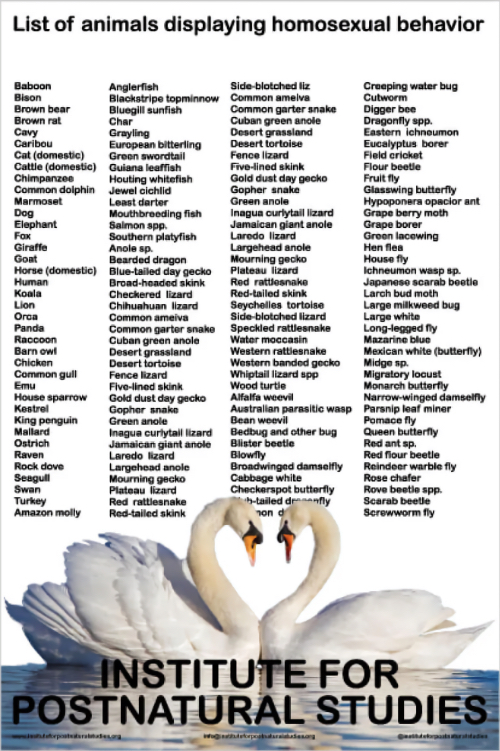
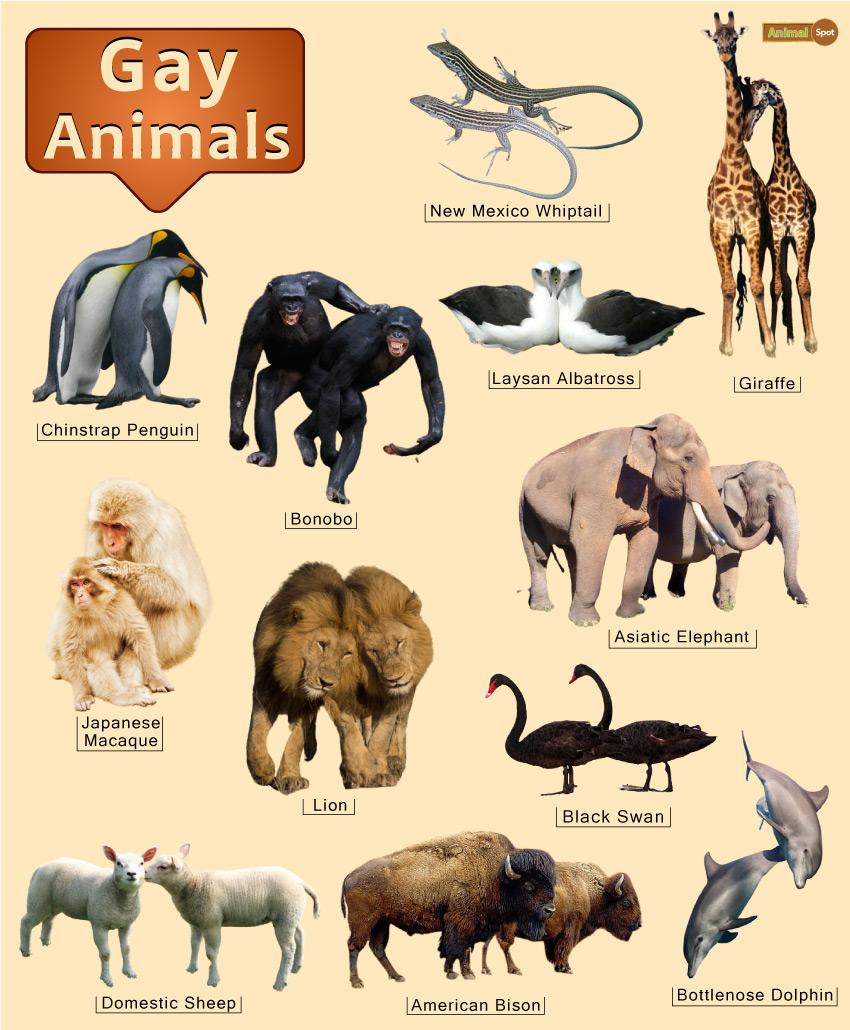
Straight up question-- can animals be gay?

So, based on my findings? Uhhh... yes.
https://en.wikipedia.org/wiki/List_of_animals_displaying_homosexual_behavior

And some infographics, if such help:


https://i.pinimg.com/736x/7c/a8/c9/7ca8c90d59620bbab6775d8148b671f7.jpg


https://www.ideabooks.nl/media/c2/ff/3a/1759454690/250793.posterswans.jpg.jpg


https://www.animalspot.net/wp-content/uploads/2023/04/Gay-Animals.jpg


So here's my question-- if homosexuality is so absolutely common across nature, then what are we doing putting it down so hard when it comes to us naked apes? Like, why is there any stigma whatsoever upon our sexual attraction choices, anyway?

Now, I hate to link to the Evil Empire, but this here dude seemed to offer some insights:
https://www.reddit.com/r/bestof/comments/pnhuwg/u300trees_and_replies_give_examples_of_incorrect/

In any case, my current takeaway is this-- whatever one's attraction is upon others, such is completely normal, ordinary and common when it comes to Nature. We know that from the landslide of available evidence seen again & again, as above.

Which suggests to me that if someone's trying to tell you that there's anything wrong with liking whoever you're sexually attracted to, then chances are they're the weirdos from the healthy standpoint of Nature.

So "why are they doing that..?" one might ask. "Who trained them to be so strangely judgemental in the first place?" Those might be some followup questions...

24


From Albert Lavallee

I think it is fairly unique to photograph a fish jumping out of the water to catch a Honeybee, but it is certainly unusual when two Green Sunfish try for the same bee.

Lake Waurika WMA, SW Oklahoma, USA.

Canon R5, Canon RF 200-800mm IS lens, Tripod.

Settings, ISO 12800 (yes, it was before Sunrise and cloudy) Tv 1/1600sec, Av 9.0, lens at 432mm.

25
55
submitted 2 weeks ago* (last edited 2 weeks ago) by Jerb322@lemmy.world to c/animals@lemmy.world


American toads. They get trapped in the ground wells( for checking continuity of the sites grounding ring, under ground) often.

Edit: Added a picture of a ground ring. The well is a spot that is accessible from above. I usually remove the gravel around them if I can, to make the sides taller. And I put a rock in the hole on top. A lot of companies are moving away from this tipe of cover. Sometimes the lid is just missing. I guess I could get some screen but that would probably get pretty expensive for me. I check the wells at every site go to. Rescue as many as I can.

view more: next ›