



Campism is when you criticise the Soldiers of the Fascist Empire apparently
23
Hospitals Nationwide Caved to Trump on Trans Youth Care. Children's Minnesota Is One of the First to Bring It Back.
(www.erininthemorning.com)
cross-posted from: https://hexbear.net/post/8195377
cross-posted from: https://news.abolish.capital/post/40807
Childen’s Minnesota
Erin In The Morning is a reader-supported publication. To receive new posts and support my work, consider becoming a subscriber.
Some Minnesota families caught in the crosshairs of Trump’s war on trans kids can once again breathe a little easier, at least for now. Children’s Minnesota, a major regional hospital system, is reinstating the care it had paused on February 27 for transgender youth.
“The decision follows a federal court ruling that vacated a federal declaration attempting to restrict gender-affirming care,” a statement from the hospital, shared with Erin in the Morning, said.
“We are contacting patient families that were affected by the temporary pause in certain services. Offering science- and research-based health care to transgender and gender diverse youth is part of Children’s Minnesota’s vision of being every family’s essential partner in raising healthier children.”
Of the Gender Health program’s 700 active patients, less than 5% were directly and immediately impacted, the hospital said. In other words, the federal government’s crackdown targeted a program that was serving only a few dozen minors with these specific treatments.
The care pause only ever impacted puberty blockers and hormone replacement therapy. Children’s Minnesota never performed gender-affirming surgeries specific to trans patients under 18 and psychotherapeutic interventions were relatively unaffected.
“This pause was difficult and hard news for all of our patients,” the statement continued. “The temporary pause was a decision we did not want to make. It was a decision we had to make due to conditions at the time.”
On Dec. 18, Robert F. Kennedy Jr., Secretary of the Department of Health and Human Services issued a declaration that dubbed gender-affirming care for trans minors as medically unsound, and could therefore be restricted. However, the March ruling from Judge Mustafa T. Kasubhai found that Kennedy does not possess the legal or scientific authority to render an entire field of health care “not medicine.” Therefore, the Dec. 18 HHS declaration, which excluded providers of such care from participating in federal healthcare programs, was deemed unlawful.
Over 20 states filed a federal lawsuit in December, including Minnesota, against the Trump regime in response to the attacks on trans people’s health care.
Then, in April, the BMJ reported:
The coalition argued that the HHS declaration unlawfully sought to pressure providers by threatening their participation in federal health programmes including Medicare and Medicaid. Accepting this argument, Kasubhai said, “There’s a theme of break it and see what others will do” in the way that the HHS attempted to change national health policy on gender affirming care, using a public statement without allowing the necessary public consultation.
“That’s not a system or method committed to the rule of law,” Kasubhai added.
Now, Judge Kasubhai must decide “whether the federal government should be barred from using the declaration’s reasoning in any future action against hospitals, according to legal analysts,” Becker’s Hospital Review, an industry publication, reported on April 1. In other words, it’s weighing whether the declaration can be cited or used as evidence in a court of law in the future.
“That question, which could determine how much leverage the administration retains over healthcare organizations going forward, remains unresolved.”
Recently, the Department of Justice also sued the state of Minnesota over its trans-inclusive bathroom and sports policies in schools.
“We have been living in a world in Minnesota that is inclusive of LGBTQ people for a long time, and these issues have never been prevalent—it’s not been a problem until we had a federal government that decided that we had to eradicate these people,” said Rep. Leigh Finke, the first openly transgender member of the Minnesota Legislature and a founding member of its Queer Caucus, in an interview with Erin in the Morning earlier this month.
Pam Bondi, who had been leading the charge at the DOJ since Trump’s return to office, was fired from her position as the Attorney General on April 2. It’s not immediately clear who will take her place—or how they will maneuver the upcoming legal battles over trans rights coming down the pike.
Erin In The Morning is a reader-supported publication. To receive new posts and support my work, consider becoming a subscriber.
From Erin In The Morning via This RSS Feed.
26
Spanish PM Says Ceasefires 'Always Good News,' But Trump Deserves No Praise | Common Dreams
(www.commondreams.org)
cross-posted from: https://hexbear.net/post/8195376
cross-posted from: https://news.abolish.capital/post/40809
Spanish Prime Minister Pedro Sánchez on Wednesday welcomed news of a two-week ceasefire in Iran as a step back from the brink of catastrophe, but said the war's aggressors—the US and Israel—deserved no praise for the temporary reprieve.
"Ceasefires are always good news. Especially if they lead to a just and lasting peace," Sánchez wrote on social media. "But this momentary relief cannot make us forget the chaos, the destruction, and the lives lost. The government of Spain will not applaud those who set the world on fire just because they show up with a bucket."
"What’s needed now: diplomacy, international legality, and PEACE," the prime minister added.
Drawing US President Donald Trump's ire, Spain's government has opposed the US-Israeli war on Iran from the start, calling it a "cruel, absurd, and illegal" assault and closing off Spain's military bases and airspace to American forces involved in the attack.
"Remaining silent in the face of an unjust war is an act of cowardice and complicity," Sánchez said last month.
Spain's foreign minister, José Manuel Albares, said Wednesday that the government supports "the crucial work of the mediators," including Pakistan, in preventing further escalation of the conflict that the US and Israel launched in late February.
"Diplomacy, negotiation, and international law are the only path to the lasting peace that the citizens of the Middle East deserve," said Albares. "All parties must show responsibility and commitment to ceasing attacks and de-escalating, which Spain will continue to support."
The foreign minister went on to stress that the ceasefire "must extend to Lebanon," which Israel has invaded and bombed relentlessly in recent weeks, displacing 20% of the country's population, devastating its healthcare system, and killing more than 1,500 people. On Wednesday, the Israeli's unleashed a massive bombing blitz of Beirut, the nation's capital and largest city.
Israeli Prime Minister Benjamin Netanyahu said following Trump's announcement of the two-week ceasefire deal with Iran that the agreement "does not include Lebanon."
"Spain will not spare any efforts in supporting the Pakistani mediation efforts in the war in the Middle East and in paving the way for diplomacy," Albares said Wednesday. "Today is a day of hope that we hope will culminate in a definitive peace that must include Lebanon."
From Common Dreams via This RSS Feed.
cross-posted from: https://hexbear.net/post/8166487
cross-posted from: https://news.abolish.capital/post/40164
This article by Elio Henríquez originally appeared in the April 3, 2026 edition of La Jornada, Mexico’s premier left wing daily newspaper.
San Cristóbal de Las Casas, Chiapas. The main victim of the current stage of capitalism is the nation-state, which now has no decision-making capacity, stated Captain Marcos of the Zapatista Army of National Liberation (EZLN).
He added that “in our opinion, we may be wrong, but the reconstruction of the nation-state is not possible because it no longer has fundamental bases.”
Marcos expressed the above during the second day of activities of the April 2026 Seedbed: The Storm Inside and Outside According to the Zapatista Communities & Peoples, which is being held in San Cristóbal with the participation of 418 people from some thirty countries, including Germany, Argentina, Brazil, Chile, the United States, France, England, Iran and Italy, in addition to members of the EZLN.
Captain Marcos of the EZLN in an archive photo. Photo: Cuartoscuro
Speaking this Friday [in discussion entitled], A Peephole into the Storm in the World: Nation-States Under Attack, he said that “the Nation-State is born for capitalism, that is, the bourgeoisie needs a State, a territory, a currency, laws, a geographical delimitation, a coat of arms, a flag. And so nation-states are born.”
In fact, he added, “in Europe, where feudalism was displaced and revolutions began to form the nation-state, that is where capitalism found its breeding ground and began to develop. It developed so much that the nation-state became an obstacle, and capitalism, the system, needed goods to circulate, to be sold quickly, and to generate the greatest profit as quickly as possible.”
He pointed out that “national currencies, the national legal structure, the governance they call it—that is, the form of government and the entire legal system—are obstacles to them. Then, free trade agreements come along, and borders open up for investments and goods but close down for human beings.”
Marcos reiterated that “the nation-state has no decision-making power. Sovereignty is a bad joke. They can’t say that Mexico is sovereign, even if they say so on the Mañanera, if it can’t even decide whether to send oil to Cuba. It can’t be. In a developed nation-state, that decision belongs to the government: to say who to give or sell to, or who not to. It’s no longer possible.”
“The entire offensive under the names of (Donald) Trump and (Benjamin) Netanyahu is related to this. Israel thinks it is defending the nation-state, but that is not true. As long as the people of israel do not understand that Palestine is the home of the Palestinians, that they will always want to return, and that they carry the key to their land with them wherever they go, until they die, are killed, or disappear, this will not stop.”
In reality, he elaborated, “Netanyahu isn’t defending the State of israel, that’s a lie. He’s conquering territory, but the Palestinians aren’t going to surrender. I don’t know how many years it will take; they’re not going to surrender. There’s something deep within the Palestinian people that I can’t explain, and I don’t know if anyone can: Why, with everything against them, do the Palestinian people continue to resist? Why are the Cuban people preparing for an invasion? If they’re supposedly under a dictatorship, why don’t they take to the streets and say: Yes, invade us and liberate us?”
He added: “Why did the U.S. military enter Venezuela to kidnap Nicolás Maduro and Cilia—it was funny how the media didn’t want to say kidnapping and said they went to arrest them—and if they [the opposition] won the elections, why didn’t anyone take to the streets to welcome them? They had to make a one-way trip. It’s not that they had almost no casualties; they didn’t have any because the U.S. military uses mercenaries for that. These mercenaries don’t exist; they’re paid, and if they’re killed, that’s it, but they’re nameless. So, the U.S. military casualties during the kidnapping in Venezuela don’t appear on the lists, and the major left-wing analysts, including those from Cuba, take it for granted that what Trump says about them having no casualties is true. They did. What happened is that they used mercenaries. Just like Putin had to use them in Ukraine. Even a country’s national army can no longer sustain a war as a nation. They have to rely on other resources.”
Subcomandante Moisés
Marcos asserted that in the US and israel’s war against Iran, the big oil companies are the ones who benefit because the price of oil has risen. “That’s what needs to be discussed: who is profiting from these wars?”
He said that “we also need to delve deeper and specify who benefits from Netanyahu’s war against Palestine. Who benefited from the United States’ attack on Venezuela, and who will benefit if they attempt to invade Cuba, which won’t be the same, you know? The Cuban people were born in resistance. They’ve been doing it for over 60 years. It won’t be as easy as they think.”
Subcomandante Moisés, who spoke about A Window to Zapatismo: A Window to Government Counterinsurgency Programs in Territories of Zapatista Indigenous Peoples, expressed that the migration of Indigenous people and peasants to the United States has caused lenders to keep their lands because they cannot pay the loans they took out to emigrate.
“Because of poverty and migration, some people mortgaged their land in exchange for loans. They left, some died, others returned, but they have no way to pay, and the lender keeps the land,” he said.
He added that the fact that “the five, ten, or twenty people who mortgaged or sold their two and a half hectares has led to the emergence of small landowners. Within the ejido, a small or medium-sized landowner has now emerged with 100, 200, or 300 hectares. Before, it was communal land, plots of 20 hectares, and now two, three, or four people own 300 or 400 hectares. The community has been erased. Now it’s just an empty shell.”
President Sheinbaum: Unlikely the Right Wing Will Return to Power in Mexico
April 4, 2026
The Mexican President indicated that the financial outlook is positive for the country, which demonstrates the viability of its economic model.
EZLN: The Nation-state No Longer Has Decision Making Power
April 4, 2026
“Sovereignty is a bad joke. They can’t say that Mexico is sovereign, even if they say so on the Mañanera, if it can’t even decide whether to send oil to Cuba.”
Social Programs Will Cushion Impact of Global Chaos in 2026: Mexico’s Finance Secretary
April 3, 2026April 3, 2026
By 2026, social program spending will reach nearly one trillion pesos, with the goal of sustaining the well-being of the majority of families.
The post EZLN: The Nation-state No Longer Has Decision Making Power appeared first on Mexico Solidarity Media.
From Mexico Solidarity Media via This RSS Feed.
71
Maryland Advances Bill That Would Protect Trans Students In "Any Program Or Activity"
(www.erininthemorning.com)
cross-posted from: https://hexbear.net/post/8137710
cross-posted from: https://news.abolish.capital/post/39721
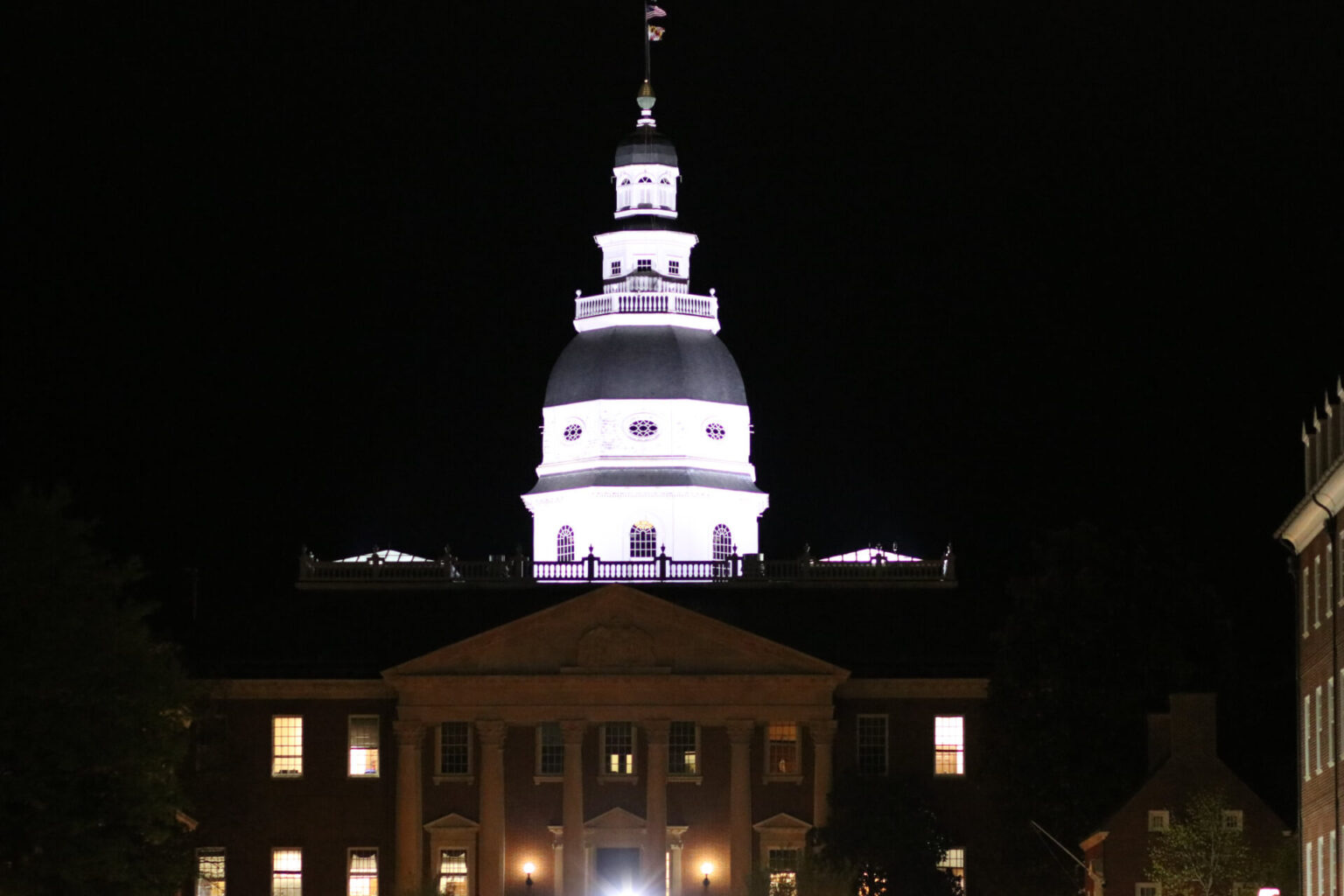
Photo by Danielle E. Gaines.
Erin In The Morning is a reader-supported publication. To receive new posts and support my work, consider becoming a subscriber.
During the Trump administration’s time in power, transgender students have lost the ability to fight for their Title IX protections against schools that discriminate against them. Meanwhile, the Supreme Court has greenlit the targeting of LGBTQ+ students repeatedly this term. Maryland, though, appears poised to push back with a new bill that is rapidly advancing through the state legislature. HB 649, which has already passed the House of Delegates 100-35, would significantly expand protections for transgender students across the state, giving them a private right of action to sue schools that discriminate against them in "any program or activity"—a phrase borrowed directly from Title IX that would explicitly protect participation in sports, admissions, and access to school facilities and programs statewide. The bill was heard in a Senate committee yesterday.
The bill states that "an educational institution may not exclude an individual from participation in, deny a person the benefits of, or subject an individual to discrimination within, any program or activity of the educational institution on the basis of race, color, national origin, ethnicity, ancestry, religion, sex, pregnancy, sexual orientation, gender identity, disability, age, or marital status" (emphasis added). The language is significant and expansive: the bill defines "educational institution" to include both public and nonpublic prekindergarten programs, elementary schools, secondary schools, institutions of postsecondary education, institutions of higher education, and any other educational program leading to a certificate, diploma, or degree—covering virtually every school in the state from pre-K through college.
The bill was brought at the request of Maryland's own Commission on Civil Rights. In its testimony, the Commission laid out the urgency in stark terms: the federal Office for Civil Rights, which has historically been the primary enforcement mechanism for students facing discrimination, has been gutted under the Trump administration. OCR complaints from Maryland residents surged to 130 in 2024—but after January 2025, the office effectively stopped processing them. Furthermore, when the administration does take action, it is against transgender students, not in favor of their rights. The ACLU of Maryland, which also testified in favor of the bill, noted that when the current president took office, many OCR complaints were dismissed without investigation. "With the dismantling of USDE and OCR, Maryland must fill the gap to ensure that the civil rights of all Maryland students are protected and upheld," the ACLU wrote.
The bill is notable for two reasons. The first is its use of the phrase "any program or activity" in its protection of transgender students. Maryland's existing nondiscrimination law, the 2022 Inclusive Schools Act, prohibits schools from "discriminating against” students based on gender identity—but does not explicitly guarantee the right to participate in all school programs and activities. The current vague language can leave room for schools to argue that barring a trans student from a sports team or denying access to facilities does not constitute discrimination. Only a handful of states have closed this gap. California's landmark 2013 School Success and Opportunity Act explicitly guarantees transgender students the right to "participate in sex-segregated school programs and activities, including athletic teams and competitions, and use facilities consistent with his or her gender identity." Connecticut similarly requires "equal opportunity to participate in school activities, programs, and courses of study" regardless of gender identity. Maryland's HB 649, by adopting the Title IX formula—"exclude from participation in, deny the benefits of, or subject to discrimination within any program or activity"—would place the state among this small group.
Secondarily, the bill creates a private right of action. Under Maryland's current framework, a student alleging discrimination must depend on government agencies acting in their favor. HB 649 changes that. A transgender student experiencing discrimination in bathrooms, sports, dormitories, or any other school program would be able to sue the school directly in state court, without waiting for the state superintendent or the attorney general to act on their behalf. The National Women's Law Center Action Fund, which testified in support of the bill, called this pathway "critical for student survivors of sexual assault and LGBTQI+ students who may face greater hurdles in obtaining justice on federal civil rights claims." Any school that capitulates to Trump administration demands to roll back transgender protections may now face lawsuits directly from the students it harms, should this bill pass.
The bill has the support of Maryland's LGBTQ+ Caucus, which submitted a letter of support calling it a necessary step to close enforcement gaps in civil rights law. "For LGBTQ+ students, actionable nondiscrimination enforcement supports a safer school climate, better academic outcomes, and recognition and respect for gender diversity and sexual orientation as integral parts of students' identities," the caucus wrote. "Ensuring that LGBTQ+ students and educators are protected under state civil rights law helps educational environments become more inclusive, safe, and equitable for all."
The bill passed the House 100-35 on March 23 and has been referred to the Senate Education, Energy, and the Environment Committee, where it was heard yesterday. The Senate must act before the legislative session ends on April 13. If passed, the bill is likely to be signed by Gov. Wes Moore, who has signed the Trans Shield Act, the Trans Health Equity Act expanding Medicaid coverage for gender-affirming care, and declared Maryland a sanctuary state for transgender people.
Erin In The Morning is a reader-supported publication. To receive new posts and support my work, consider becoming a subscriber.
From Erin In The Morning via This RSS Feed.
222
Transgender Woman Defies Kansas's Extreme Bathroom Ban In Act Of Civil Disobedience At State Capitol
(www.erininthemorning.com)
cross-posted from: https://hexbear.net/post/8137444
cross-posted from: https://news.abolish.capital/post/39745
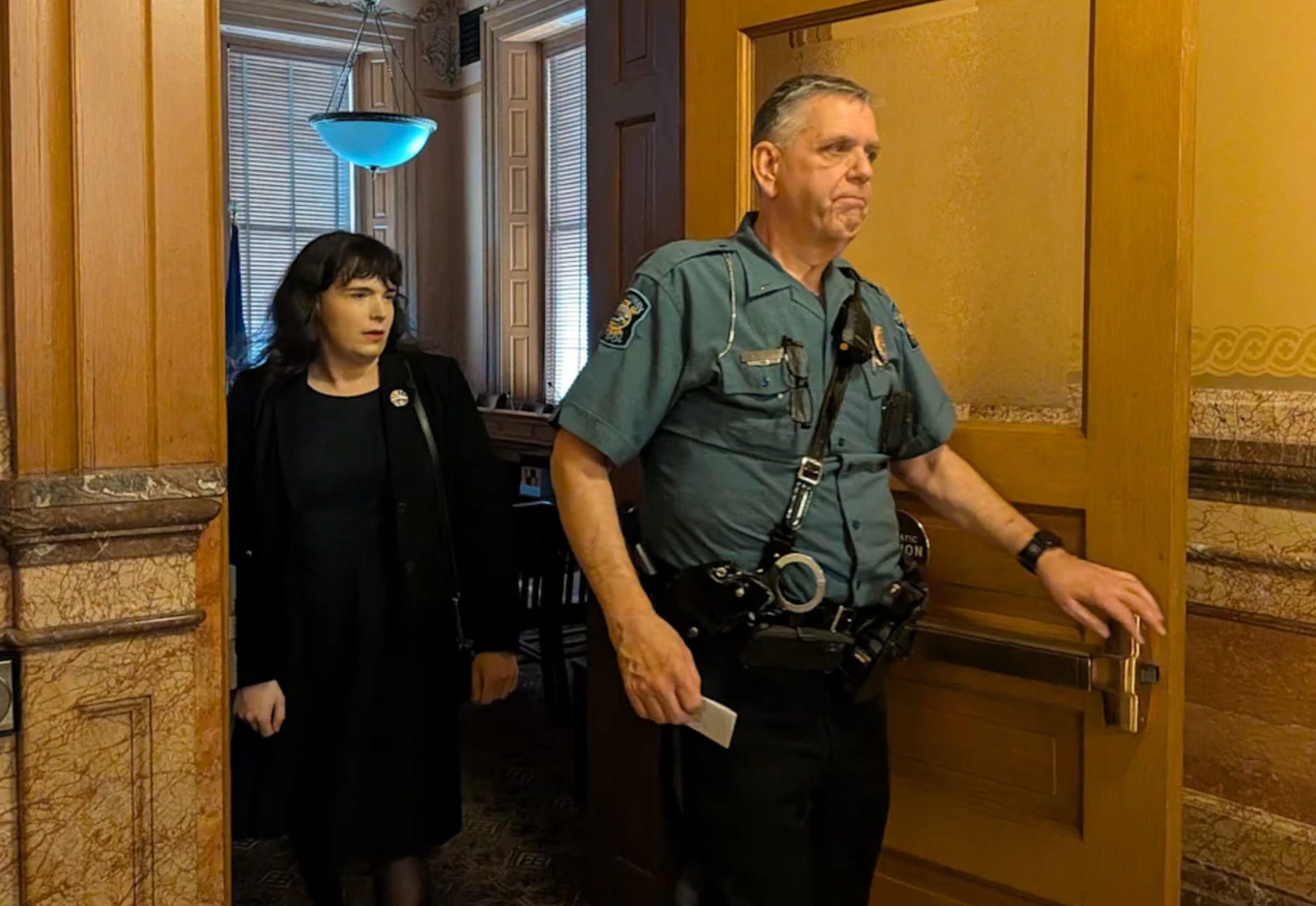
Topeka Capital Journal
Erin In The Morning is a reader-supported publication. To receive new posts and support my work, consider becoming a subscriber.
Samantha Boucher openly defied the state laws of Kansas when, in the presence of the Governor and the police, she walked into the bathroom in an act of civil disobedience.
Boucher is the founder and executive director of Trans Liberty and a transgender woman. The bathroom was in the Kansas statehouse. The morning was March 31st: the Transgender Day of Visibility.
The police showed her the way. Governor Laura Kelly, who Boucher encountered along the way, accepted a gracious thanks from Boucher. Kelly had tried to veto the bathroom ban bill that Boucher was now defying, but she was overridden by a heavily conservative state legislature.
“I think this would be extremely dangerous for a Kansan to do, but ... I’m more than happy to put myself at that risk if it means that somebody else doesn’t have to, because eventually someone would try this,” Boucher told the Topeka Capital-Journal. “I’m really interested to see what the attorney general chooses to do here.”
The Topeka Capital-Journal on Instagram: "A transgender activis…
Boucher’s modest protest transpired as the state crackdowns on trans people escalated: banning them from using bathrooms in public buildings that don’t match their sex assigned at birth, instituting a “bounty” to incentivize snitching on trans people who use the “wrong” restroom and institutions that don’t sufficiently sex-check people at the bathroom door, and most notably, revoking transgender people’s driver’s licenses if they don’t match their sex assigned at birth. Those caught with the “wrong” gender on their driver’s license could face criminal charges, making it the most extreme anti-trans ID law in the country.
None of this deterred Boucher. “I commend her for calling attention to state-sanctioned discrimination and for her bravery in challenging those who support such discrimination to put their votes into action,” Rep. Abi Boatman of Kansas’ 86th district in Wichita, told Erin in the Morning.
Boatman is one of a handful of transgender state lawmakers in the country; she is not legally allowed to use the women’s restroom in her own place of work at the Capitol, and she cannot drive to work with an ID that accurately depicts her gender.
Boucher left yesterday a free woman, but Kansas authorities are investigating the matter.
Others are not so lucky. Transgender and cisgender people alike have been caught up in the anti-trans panic—people have been harassed and filmed in the bathroom, accosted by police or security guards, physically assaulted, and arrested after using the restroom, even in states with no such “bathroom ban” on the books.
Some of these instances have been planned protests; others were unsuspecting patrons and private citizens simply using the restroom. That’s because these laws rely on piecemeal enforcement, vigilante bathroom police, self-censorship, and above all, fear.
The political landscape is especially dangerous for Black and brown trans people, who face disproportionate levels of violence and police brutality.
As Boucher approached the restrooms on the second floor, she encountered Governor Laura Kelly, who was attending an unrelated event. Boucher told the Governor what she was about to do.
“In regard to SB 244, I will use the restroom 3 times, triggering a misdemeanor,” Boucher said. “I appreciate your veto.”
Kelly commended her—and apologized. “I am very sorry that you and others have been put in this situation,” Kelly said.
According to the law, Boucher could face criminal charges as well as a $1,000 civil penalty.
Boucher was the first openly trans federal campaign manager, as per her social media. In 2019, she oversaw Democratic candidate Kimberly Graham’s Senate campaign in Iowa ahead of the June primaries. She is the founder and executive director of Trans Liberty, a trans equality PAC.
“What I hope to have accomplished here, and in whatever I become embroiled in as a result, is making sure that the nation doesn’t forget that this is happening here,” Boucher said as per local press reports. “This is unprecedented, and it cannot be allowed to stand.”
Erin In The Morning is a reader-supported publication. To receive new posts and support my work, consider becoming a subscriber.
From Erin In The Morning via This RSS Feed.
calling for everyone to work together
Really? From this reply you made clear what you want is to share the blame
We live in an interconnected world. The fascist empire exists in part because the world allows it to.
You can say whatever you want to try to dilute and deflect any criticism, but to us outside the empire, we simply can watch the news to see who is the real problem
Dont blame me, im one of the victims of your fascist empire
Wont somebody please think about the war criminals of the Epstein Coalition? 

Maybe if you dont want to be called a transphobe dont post transphobic memes from 4chan

doesn't vote
Maybe earn the votes by running popular policies? Lmao
vote for the candidate that will do less evil when they’re in office, if there is no better option.
Im sorry but thats just a losing strategy, if you dont demand better, you will never get better as a choice
criticises Center-Right political party from the left
smartest Blue Maga:
You are seriously spreading right wing talking points
Calls others bots, cant imagine people being able to do more than 2 things at the same time.
Blue MAGA proving they arent too different from their brothers in red
Top Democratic officials who worked on the party's still-secret autopsy of the 2024 election concluded that Kamala Harris lost significant support because of the Biden administration's approach to the war in Gaza, Axios has https://web.archive.org/web/20260223002443/https://www.axios.com/2026/02/22/dnc-2024-autopsy-harris-gaza
Wow, maybe dont run pro-genocide candidates if you want your base to Vote for you? Or do you think the cult-like devotion of the republicans is a positive democrats should follow?
view more: next ›
Pictures plus the communique
full communique
For as long as the land continues to bleed under Israeli bombs in Occupied Palestine and across West Asia, ground must continue to shake under the feet of the sponsors of occupation.
We are The Earthquake Faction, an internationalist underground network that targets key sites critical to the Zionist entity. We aim to destroy all limbs of empire from within, by any means effective.
On March 20th 2026, we struck the epicenter of the Israeli weapons industry in Europe. In Pardubice, Czech Republic, Elbit Systems’ “Centre of Excellence” was newly built in collaboration with LPP, to service the global expansion of Israel’s biggest weapons producer. Whilst the development, production and training center was empty, The Earthquake Faction intervened to destroy its equipment and set the factory ablaze. No one was harmed.
During the Gaza genocide in 2024, LPP’s CEO said “one of the projects we are preparing with Elbit concerns the Israeli military”. Their “Centre of Excellence” is used as a means to develop weaponry used by the Zionist entity to massacre people daily in Palestine, Lebanon, Iran, and across West Asia. Every weapon developed by Elbit Systems is first “tested” on Palestinians, before being sold on to international governments, expanding the empire built off the destruction of Palestine.
Wherever Elbit Systems and their accomplices obscure and hide their business of bloodshed across the world, we will come for them.
We are in the belly of the beast, surrounded by the stench of evil. The technology, weaponry and capital needed to maintain the imperial and Zionist violence are all within our reach. The Earthquake Faction will shake the ground under the boots of the colonizers; while even an atoms weight of their evil remains, we will strike it out.
There is no time to beg the complicit international governments. We will not waste our breath asking nicely. Instead, we will take necessary action to quash their means to kill.