politics
Welcome to the discussion of US Politics!
Rules:
- Post only links to articles, Title must fairly describe link contents. If your title differs from the site’s, it should only be to add context or be more descriptive. Do not post entire articles in the body or in the comments.
Links must be to the original source, not an aggregator like Google Amp, MSN, or Yahoo.
Example:
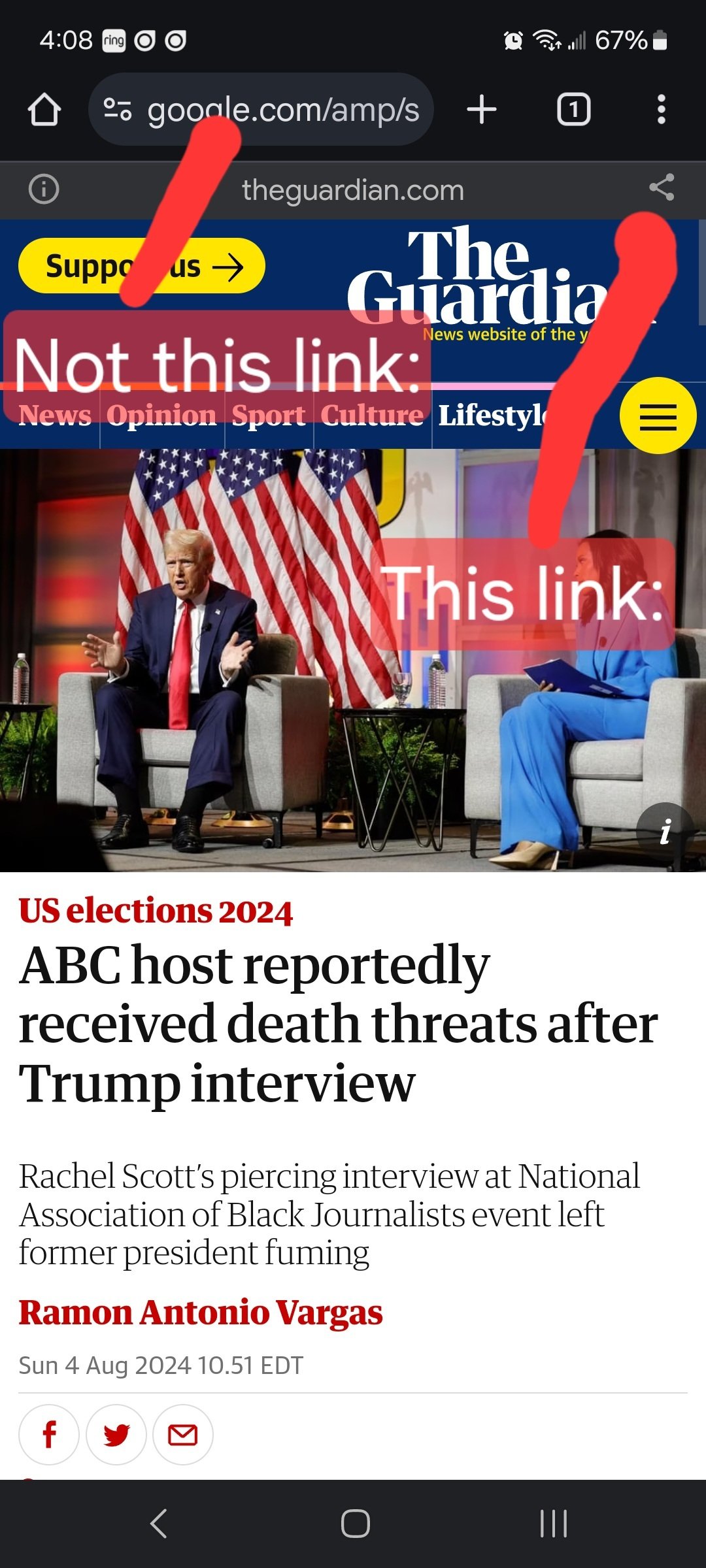
- Articles must be relevant to politics. Links must be to quality and original content. Articles should be worth reading. Clickbait, stub articles, and rehosted or stolen content are not allowed. Check your source for Reliability and Bias here.
- Be civil, No violations of TOS. It’s OK to say the subject of an article is behaving like a (pejorative, pejorative). It’s NOT OK to say another USER is (pejorative). Strong language is fine, just not directed at other members. Engage in good-faith and with respect! This includes accusing another user of being a bot or paid actor. Trolling is uncivil and is grounds for removal and/or a community ban.
- No memes, trolling, or low-effort comments. Reposts, misinformation, off-topic, trolling, or offensive. Similarly, if you see posts along these lines, do not engage. Report them, block them, and live a happier life than they do. We see too many slapfights that boil down to "Mom! He's bugging me!" and "I'm not touching you!" Going forward, slapfights will result in removed comments and temp bans to cool off.
- Vote based on comment quality, not agreement. This community aims to foster discussion; please reward people for putting effort into articulating their viewpoint, even if you disagree with it.
- No hate speech, slurs, celebrating death, advocating violence, or abusive language. This will result in a ban. Usernames containing racist, or inappropriate slurs will be banned without warning
We ask that the users report any comment or post that violate the rules, to use critical thinking when reading, posting or commenting. Users that post off-topic spam, advocate violence, have multiple comments or posts removed, weaponize reports or violate the code of conduct will be banned.
All posts and comments will be reviewed on a case-by-case basis. This means that some content that violates the rules may be allowed, while other content that does not violate the rules may be removed. The moderators retain the right to remove any content and ban users.
That's all the rules!
Civic Links
• Congressional Awards Program
• Library of Congress Legislative Resources
• U.S. House of Representatives
Partnered Communities:
• News
view the rest of the comments
I wonder what percentage is able to accurately define what "capitalism" means.
Probably about the same percentage of the other side that can accurately define what "socialism" means.
so basicly nobody
Well, there are like five different things that people use "capitalism" to mean.
For instance, doctrinaire right-libertarians will insist that "capitalism" means the same thing as "a free market in goods and labor" even though the core institutions of capitalism — stock markets — were developed to finance colonial monopolies that used slavery. (Monopolies = unfree trade; slavery = unfree labor.) Capital markets don't care about your freedom; they work just fine without freedom of anything but capital itself.
Meanwhile, doctrinaire communists will insist that "capitalism" is a historical stage followed by workers' revolution creating socialism and eventually communism — despite actually-existing "workers' revolutions" instead producing a new sort of monarchy and feudalism, in which power is held by a single dictator and his powerful supporters.
There are other uses. For instance, a lot of pop-progressives use "capitalism" to mean something like "the vale of tears, the fallen world, this age of brass and clay, the Kali Yuga" — the human condition! Anyone who thinks scarcity, poverty, or hierarchy are the fault of capitalism is ignorant of history; these troubles are much older than capitalism! Anything that Jesus or Buddha had to deal with, isn't capitalism.
During the Cold War, "capitalism" sometimes simply meant "the geopolitical interest of the United States and Western Europe; as against those of the Soviet Union and Communist China", and secondarily "access by American and Western European businesses to the materials, labor, and markets of 'developing' countries, typically without the people in those countries enjoying the freedoms that Americans and Western Europeans themselves enjoy."
And of course, the only correct definition of "capitalism" is mine, namely "an economic system under which ventures seek funding by selling equity (partial ownership), principally through regulated public markets (i.e. the stock market)." It's not about freedom and it's not about America; capitalism is about shareholder value.
Stock markets are not fundamental to capitalism and that is most certainly not "the only correct definition," given it's not even a correct definition. The only element fundamental to capitalism is private ownership of the means of production, and that can exist and has existed without stock markets. A capitalist economy is one in which private owners make a claim to a farm, factory, or any other means by which commodities are produced or service is rendered, employ wage laborers to produce commodities or provide a service (using tools, equipment, or even just a space that is privately owned), and collect the value of their labor in the form of profit while returning a small fraction to the workers in the form of wages. Stocks just divide ownership of the means of production into shares that can be bought and sold at prices tied to the speculative value of the corporation.
Nah, there was private ownership of the means of production in Ea-nāṣir's day, but capitalism didn't come around until a few centuries ago.
That's just mean.