And with battery prices falling, the intermittency issues that made LNG useful despite the drawbacks is gradually becoming much less of a problem too.
this post was submitted on 11 Mar 2026
942 points (98.3% liked)
Climate
8969 readers
217 users here now
Discussion of climate, how it is changing, activism around that, the politics, and the energy systems change we need in order to stabilize things.
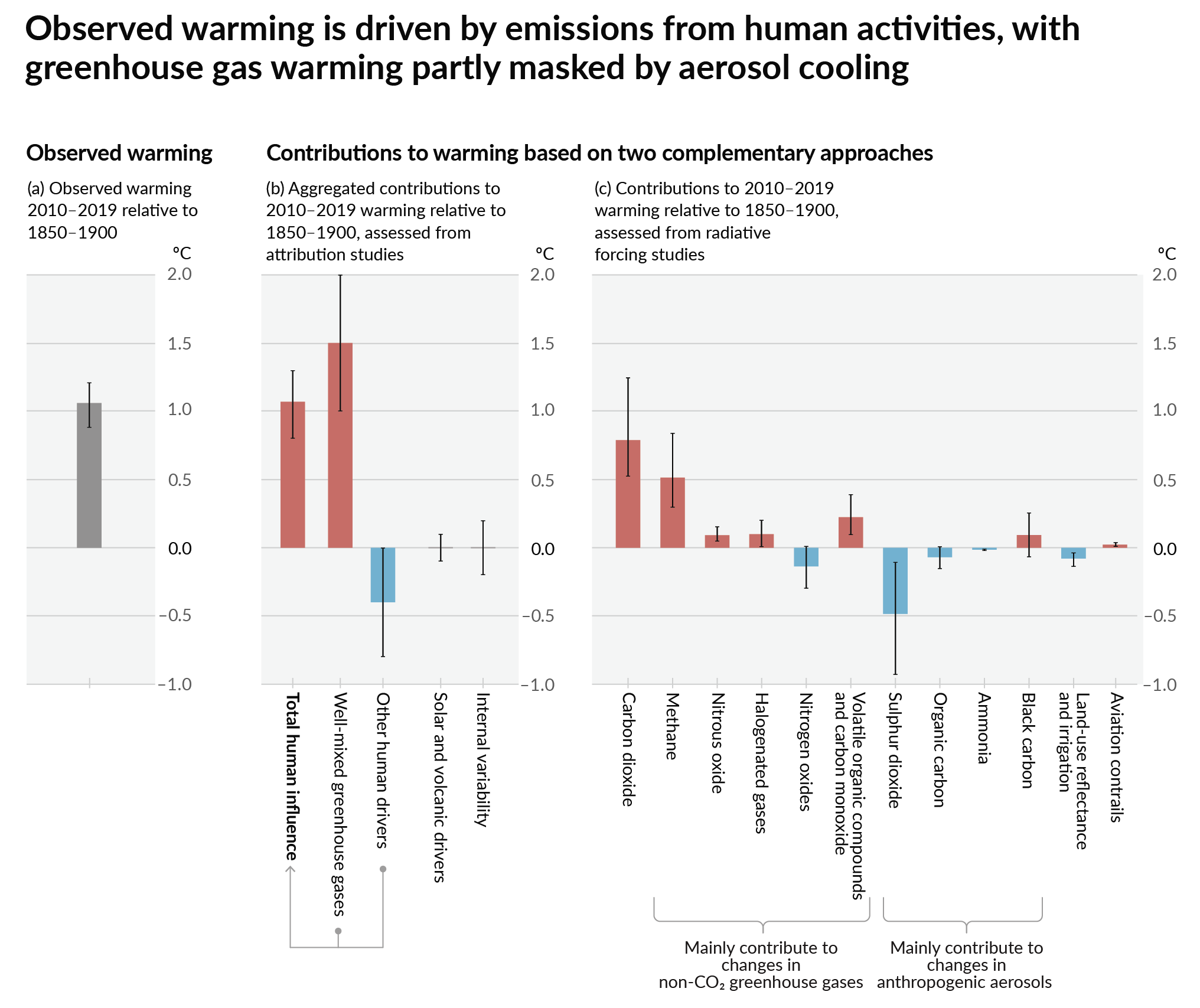
As a starting point, the burning of fossil fuels, and to a lesser extent deforestation and release of methane are responsible for the warming in recent decades:

How much each change to the atmosphere has warmed the world:
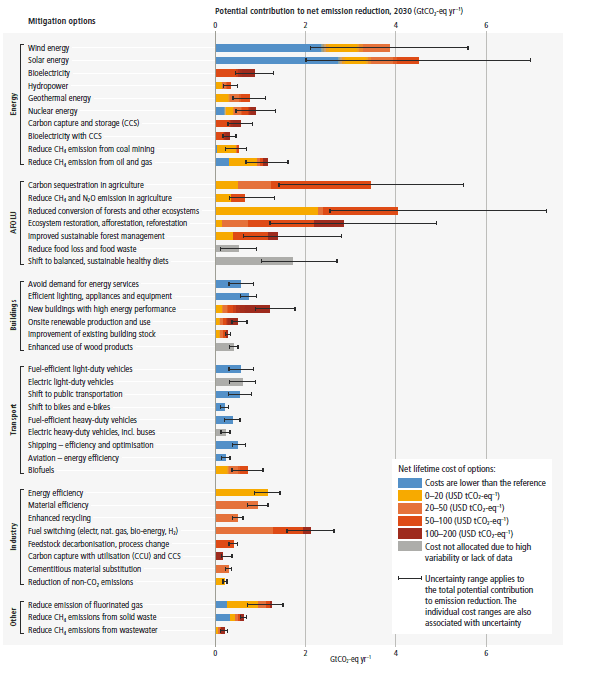
Recommended actions to cut greenhouse gas emissions in the near future:
Anti-science, inactivism, and unsupported conspiracy theories are not ok here.
founded 3 years ago
MODERATORS
And this is 2024 numbers. Gas is more expensive now that the strait of Hormuz is closed for a good long time
This is dead wrong (edit: kind of; see below). The dollars per million BTU for natural gas this February was $3.62, or 32% of the figure cited in the infographic. You're thinking of oil.
Solar is clearly more sustainable, economical, independent, and most importantly livable than LNG, but I still need to call out flawed assumptions on my side where I see them.
Edit: I actually have no idea how this infographic reached its $11 assumption. Wholesale prices for natural gas were $4.88 per MMBtu in 2024. Emphasis on "wholesale", but since this infographic doesn't deign to cite any sources other than "Ember" (this Ember?), I have no idea what figure it means.
Edit 2: After doing way too much digging into how global LNG prices are measured because this infographic barely even leaves breadcrumbs, they might've been using a metric like the JKMc1 ("LNG Japan/Korea Marker PLATTS Future") (edit 3: or the TFAc1). The prices of natural gas (transported via pipeline) and LNG (transported via ship) are going to be quite different, and there's no consistent "global average price" for LNG. The best you can really do is use some sort of proxy, for which it appears the JKMc1 is a reasonable one for reasons I don't fully understand yet. That was approximately $11 in 2024 (it was actually seemingly higher, but close enough; probably close but separate figures) and was $10.73 this February. It was $15.92 March 1, showing at least in East Asia that LNG is about 50% more expensive than last month. I don't know how well that applies to Lemmy's predominantly American and European userbase, however (well, I know the US now supplies about 60% of Europe's LNG and that American natural gas is currently cheaper).
God, it's so frustrating that this infographic barely cites anything. Anyway, to the person I responded to: you were at least somewhat right; the closing of the Strait seems to have clearly impacted East Asia... somehow. Iran and Qatar are the 3rd and 6th largest natural gas producers, respectively (no clue about LNG shipments), but I feel like I'll end up with a doctoral thesis on the geopolitics of LNG prices by 2030 from knowing basically nothing if I don't stop here. What all this does tell me is that an estimate of "global average price for LNG" means very little when prices per MMBtu (liquified or otherwise) seem to vary so heavily by region.
this right here is the only reason I'm still skeptical of pretty much everything
promoters of green and nuclear energy can't get their damn act together and create proper articles that aren't half-assed crap with no sources. They just claim shit from thin air.
Bitch, I WANT to believe you! Give me something to bloody believe that we really have no reason to use fossil fuels anymore.
I still ~~kinda~~ believe it. But CONVINCE ME ALREADY...
load more comments
(2 replies)
load more comments
(13 replies)
good time to plug the technology connections video
When is it ever a bad time?
good time to plug the technology connections video
good time to plug the technology connections video
I missed it when it made the rounds a few weeks back. Thanks for sharing again!
load more comments
(1 replies)
What do the lobbyists get out of the solar panels? How do the solar panels generate constant fees?
How do the solar panels generate constant fees?
You see, people need to pay for electricity. Generally speaking, they don't get it for free. Thus the owner of the solar panels makes money.
The issue with solar is, that the owner can be a simple home owner putting the panels on their roof. When you add batteries to that, it is entirly possible that they never need to buy electricity from the grid ever again. However we are still talking about some middle class person here, who is not going to be able to afford a lobbyist.
There are other ways well below lobbyist level as well, such a solar and wind cooperatives or some farmer setting up a few installations on his property. They do have more money, but still probably are well below lobbyist levels of money.
load more comments
(2 replies)
load more comments
(10 replies)
There are other expenses and location also plays a big role, but it is certainly true that solar is much cheaper when all is said and done. Hence why the energy transition continues in the US even without subsidies.
load more comments
(8 replies)
A) only one of those technologies is burning the planet... kinda big part of the equation
B) here are the numbers for australia:

source: https://www.csiro.au/en/research/technology-space/energy/Electricity-transition/GenCost
C) see A
Agreed. A more telling graph would incorporate socialized losses, including subsidies, life-and-limb for related industries, quality of life, and life expectancy. I sincerely doubt these costs for the construction, manufacture, and installation of solar panels comes anywhere close to that of petroleum products.
Not a fair comparison.
In a nutshell, you can't directly replace gas power with electric power. Gotta have some sort of conversion. Gas is very portable and offers big bang. Solar generally needs to be generated on demand or stored. Then it needs to be transported. We can't transport the solar power from Texas to Michigan the same way we can truck gas across state lines. The longer an electric line, the more power is lost.
Another issue with this graphic is that it implies that solar panels are a one-time expense. This isn't true. They generally last about 20 years.
I'm a champion of green energy, but a stickler for details.
Then as a stickler you should probably clarify that 20yrs isn’t the lifespan of a panel but the simply the end of most warranty periods.
The panel itself is (typically) fine, just less efficient after so long.
Solar panels are easily recyclable as are a lot of batteries once infrastructure catches up. You burn that gas and its gone.
Millions of acres are used for corn to produce ethanol mixes for gas. All of this land is under direct sun. Also wind. This again is because of corn subsidies in the US.
The amount of money tied up in oil companies is second only to the military industrial complex. If we took that money to put toward renewable, we would solve a shit ton of issues.
Yes voltage drop exists. However , you know we have electrical lines to basically every structure in the US right? Even Joe blow in the absolute middle of nowhere has power lines. The grid is already here. We need to invest in it and improve it (also destroy data centers but thats a different discussion)
Also, panels dont just abruptly die after 20 years. They slowly start losing efficiency. You could be using a 30 year old panel, and it could be at 70% efficiency depending on degradation (*I can't say if 70% is accurate , I'd have to research it). Again, gas is burned up and used instantly, one time. Panel gets old, recycle it.
But we don't do things because they're good. We do them because they're profitable. Capitalism breeds innovation right?
load more comments
(3 replies)
The beauty of solar though is its pretty deployable to where the demand is, especially rooftop solar with residential batteries.
We can't transport the solar power from Texas to Michigan the same way we can truck gas across state lines.
Batteries?
load more comments
(13 replies)
Then use the next $100M for developing energy storage infrastructure... Or split the upfront cost evenly between generation/storage. Gotta think longer term than a single years's balance sheet. Anything you build now saves you money in the future instead of shoveling it into a literal incinerator.
load more comments
(1 replies)
load more comments
(6 replies)
it can't be used to create false scarcity! is isn't massively volatile, how are the ultra wealthy going to make absurd amount of money off it?
You forgot battery storage (200 usd/kWh) and non-generation use for natgas.
Also, that's a year for the solar panels to get 1.5 TWh but the tanker probably makes that in a month.
Their argument is per unit of cost. But natgas and electricity is not fungible. Even electricity from renewable generation is not fungible with dispatchable generation.
load more comments
(1 replies)
load more comments
(3 replies)
It is blatantly not motivated by the economy (except the few vested interests).
It is mostly about power.
Okay, waiting for economics to take over then. If the markets really do work the way economists imagine then solar will become the only viable investment and power dynamics won't matter in the end.
load more comments
(2 replies)
I'm solar fan #1, but 5x that price would still be a good deal on panels
I don't know, man. What if its cloudy?
Me shouting the answer, but you can't hear it over the bombs exploding across the Straight of Hormuz
load more comments
(43 replies)
Ok ok this might work but one question, can we mine solar panels out if the ground in the middle east?
only problem with me personally about this, is that i'm stuck with gasoline using car, i dont have money to buy 50k electric car :/
Ikr? I could have had $10k BYD Dolphin, but we haaaad to do the tariff wars.
I will offhandedly mention that ebikes are getting pretty good/cheap nowadays, but that's obviously not going to work for everyone.
load more comments
(1 replies)
load more comments
(11 replies)
view more: next ›