The US is really only democratic for the capitalist class, the wealthy capital owners whose primary income originates from capital ownership. The US isn't seeing cracks in democracy, but in the entire system of financial plunder that keeps it going. Capitalists in the US, facing internal market saturation and steadily falling rates of profit, have had to expand outward, leveraging a strong overseas millitary to keep the global south under their thumb.
The US Empire wasn't the first, it's merely the largest. Britain, France, and Germany have all reached this stage of Capitalism. World War I left them debt-ridden to the US, and World War II flipped the script, with the US flooding the world with dollars, later destroying the gold standard, leveraging its own debt to essentially tax the entire world. The entire west, or the "global north," gains from this system with the US as the "top dog," and is falling down with it.
In the modern era, however, the sheer unsustainability of that system is choking itself. Manufacturing has been hollowed out and is all handled overseas, and countries in the global south are throwing off the west in favor of more favorable relations with China. The rate of profit is falling, and overconsumption as the US Empire's strongest card to keep demand up is faltering due to this. It's a house of cards.
As for socialism, the easiest answer is the PRC. Public ownership is the principle aspect of the economy, governing the large firms and key industries, enabling them to plan for the future and actually meet their targets. Market mechanics are used primarily to make central planning more efficient. This century is going to be marked by China's undisputed rise. As they continue to develop, market mechanics will continue to be phased out:
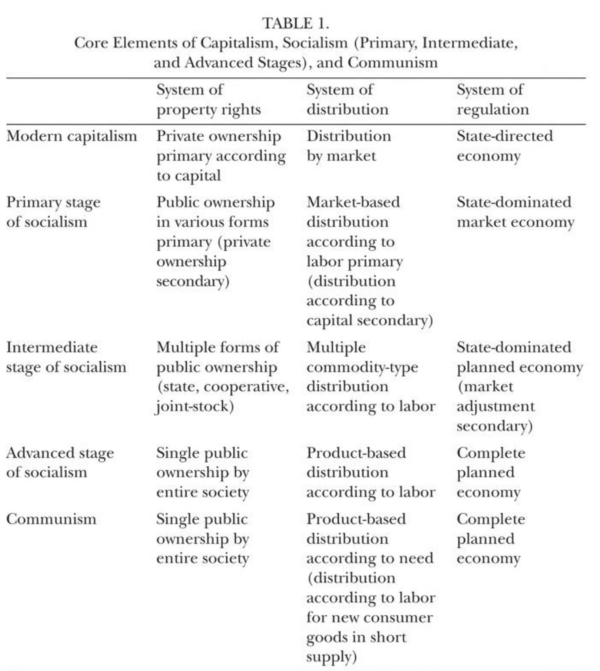
Other countries, like Cuba, manage to maintain higher quality of life metrics despite being under intense embargo than peer countries. The USSR had, in its time, the most rapid improvements in economic growth and quality of life in history. None of these countries have been perfect utopias, or anything, but all have surpassed the inherent unsustainability of capitalism.

If you want further reading, Michael Hudson's Super Imperialism is a pretty good book on how the US Empire rose in the first place, as well as how it can't continue forever, and we are merely observing its dying phase.
It isn't about "discovering" new systems. Capitalism was not invented, it emerged from mercantilism and early industrial manufacturing within the boundaries of feudalism. It was never a choice to adopt it, it arose naturally as it subsumed everything else, extending the domain of private property. History is not progressed by people randomly discovering new ideas, but is a gradual material process, and the ideas that rise and fall are secondary to that and support that process. Liberalism arose because of capitalism's rise and need for ideological justification.