this post was submitted on 28 Oct 2025
367 points (98.2% liked)
Privacy
242 readers
1 users here now
A community all about privacy and protecting your data.
founded 8 months ago
MODERATORS
you are viewing a single comment's thread
view the rest of the comments
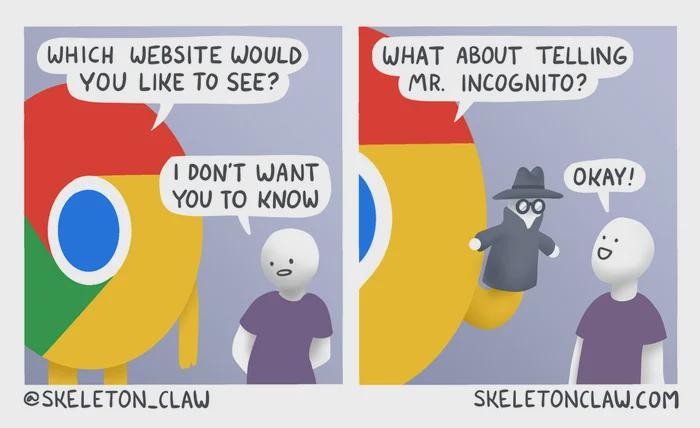
The amount of people who apparently don't get this is insane. Incognito mode is always, and has always been, about preventing your browser from saving history locally, so other users on your computer won't see what you've done. There's a reason they always use examples like going engagement ring shopping or planning a surprise party. Of all the underhanded things Google has done, this is not one of them. Chrome has always been very upfront that websites, ISPs, and network administrators can still gather information about your browsing.
Agreed. I am as anti-Google as most users here, but I have no problem admitting that I don't think I have ever seen a browser misrepresent what its private mode is doing. If a user misunderstands how it works, that is really just their own misinterpretation of the description on the label. That, or perhaps another mistaken user explained private mode to them, overselling its capabilities because they assumed it works that way.
Non-technical users are still likely to assume incognito mode gives them a greater degree of digital privacy from trackers purely from the fact that cookies aren't kept between sessions. For that same reason, Google has made false overtures about protecting user privacy by potentially deprecating third-party cookies when there are many tracking methods less well-known than cookies.
That's true, but Google has also been trying to introduce new non-tracking ways to have targeted advertising directed by your browser. The Topics API actually seemed like a really cool idea, but unfortunately it didn't get the take-up from other browsers or from websites that it would have needed to actually replace third-party cookies. They weren't "false overtures", they were sincere, but relied on the broader ecosystem picking up non-tracking alternatives like Topic (or working constructively to develop even better systems). Since that failed, Google's backed down and is allowing third-party cookies to remain indefinitely.
Notably absent from this list is Google itself. It has not been upfront about how the browser itself is collecting information from incognito browsing.
I've seen mixed reports about it, but the best I can find leads me to believe this is a slight misunderstanding, and that the browser itself doesn't do tracking, but that Google does all of its normal tracking while Incognito, like cookies, browser fingerprinting, etc.
It was my understanding that the chrome browser "phones home" all the time, but maybe i was mistaken because I can't find a reference. I did find this from wired:
So it looks like chrome was configured to pass along identifiable header information?
Wasn't there some scandal in which Chrome was caught recording specifically the urls people visited with incognito mode though?
Maybe. I've seen reports each way, but the best I can tell is it's misleading headlines and people subsequently spreading accidental misinformation based on that. For example, this article is quite reasonable and does not (in the body) say anything of the sort, but the headline makes it sound like what you said is confirmed correct.
More likely, Google, like other advertising/tracking companies, still tracks you using cookies, browser fingerprinting, etc., using scripts that run on the pages you load. And it does this whether or not you are Incognito.
I think I was mistaken about data harvesting specific to incognito mode, but the lawsuit mentioned does seem to make several allegations about Chrome itself directly spying on you, in addition to their other products used by websites spying on you: