1


Before Trump's return to office was secured, I was chatting online with a friend about Putin's strategy in Ukraine. "Putin is playing the long game," my friend observed, "he realizes he cannot win quickly, but he's patiently waiting for a miracle."

"What miracle could possibly save him?" I asked.

My friend's answer seemed absurd then: "Well, Trump could be elected." We both brushed it off as the craziest idea possible—a distant, unlikely scenario.

That dismissal has now turned to a chill of recognition. The "miracle" has materialized.

My friend also pointed out something crucial about Russian warfare that the West consistently underestimates: "Russia knows how to wage slow, grinding wars. They depend on sacrificing humans, which post-Soviet Russia has plenty of." While Western democracies measure war in weeks and political cycles, Putin measures it in years and generations. His strategic patience stems from a fundamentally different calculus of human life.

The recent White House meeting between Trump and Zelensky demonstrated this new reality with startling clarity. What should have been serious diplomacy became, in Trump's own proud words, "great television." The Ukrainian president wasn't treated as the leader of a nation fighting for survival but as a contestant on a reality show—publicly scolded and dismissed without meaningful support.

Yet the European response to this alarming spectacle has been painfully predictable. We Europeans dismiss Friday's event as a mere misunderstanding, a temporary blip in the transatlantic relationship. We continue our decades-long tradition of waiting on bended knee for American salvation. "America is a friend and it will help, for sure. They have promised." "NATO will defend us, how can it not?"

As the old military adage goes: "If you don't pay for your own army, you'll end up paying for someone else's." Europe has long enjoyed the luxury of minimal defense spending while sheltering under America's security umbrella. That bargain, which already showed cracks during previous administrations, now appears to be fundamentally broken.

This outsourcing of security has left Europe strategically impotent at precisely the moment when it needs to stand on its own. Trump's sudden embrace of "peace at any cost" represents everything the Kremlin strategists have patiently awaited. They didn't need to defeat Ukraine militarily; they simply needed to outlast Western resolve. Putin's strategy—trading time and Russian lives for Western fatigue—has paid off. Now, without firing a single additional shot, he watches as his greatest adversary's support crumbles from within.

The evidence of Kremlin influence is no longer subtle. Trump's talking points—from questioning Ukraine's sovereignty to suggesting territorial concessions—echo Moscow's propaganda with alarming precision. What took years of sophisticated disinformation campaigns to seed now flows freely from the Oval Office.

Europe faces an existential choice: step forward immediately to fill America's retreating role or watch as the rules-based order collapses. Each day of European hesitation is a victory for Putin, who has mastered the art of the long game while Western democracies remain trapped in short-term thinking and strategic dependency.

The Ukrainian people, who have endured years of Russian terror, deserve better than becoming pawns in America's domestic political games or victims of Europe's strategic complacency. This humiliating spectacle reveals the cruel calculus of modern geopolitics: principles crumble before personalities, democratic values bow to authoritarian pressure, and what we once dismissed as a crazy improbability has become Ukraine's waking nightmare.

Putin waited for his miracle, and against all odds, it arrived in Washington—proving once again that those who can sacrifice the most and wait the longest often prevail in geopolitics, regardless of moral standing.

While our governments dither in bureaucratic paralysis—or to put it in more direct terms, while they prove themselves utterly useless—we as citizens cannot afford to wait. If this spectacle has shown us anything, it's that relying solely on official channels means accepting defeat by delay.

For every dollar America withholds, let's send two euros. This isn't just a slogan—it's a practical response. If Trump cuts a billion in aid, Europe's citizens should mobilize two billion. Not through our hesitant governments, but through direct action and personal commitment.

Support for Ukraine must become a personal responsibility. There are countless ways to help—donate directly to Ukrainian aid organizations, support businesses that employ Ukrainian refugees, push your local representatives to act even as national governments hesitate, or volunteer your skills, time, and resources.

For a comprehensive list of vetted charities supporting everything from military equipment to humanitarian aid to animal shelters, visit the r/ukraine wiki at https://www.reddit.com/r/ukraine/wiki/charities/ or simply search online for Ukrainian support organizations. Choose one or two that align with your values and commit to regular contributions.

The question is no longer whether Europe's institutions will step up, but whether its people will. Every euro sent directly to Ukrainian humanitarian efforts or defense funds is a statement that we refuse to be complicit in Putin's waiting game. If our governments won't lead, then we must—from the ground up, person by person, community by community.

History will remember not just what our leaders failed to do, but what ordinary citizens chose to do despite them.

2
3


Russian assault teams consist of wounded soldiers on crutches. The Russian army command has formed and sent assault teams consisting of wounded men on foot into battle. One of the militaries filmed on his phone as wounded Russian army soldiers prepare for another attack.

4


cross-posted from: https://szmer.info/post/15796030

cross-posted from: https://szmer.info/post/15796028

cross-posted from: https://szmer.info/post/15796027

🟦 Russian diplomats say Israel promises to continue refraining from military supplies to Kyiv and to maintain direct political contacts with Moscow.

🟦 Israel denies selling arms to Ukraine

• Alexander Kinshchak, head of the Russian MFA’s Middle East department, said Israel has assured Moscow that reports of weapons deliveries to Kyiv are false.

• Russian officials have discussed such claims with Israel through various channels and have been convinced that these reports do not reflect reality.

• Israel continues to adhere to its "stated position on this sensitive issue", Kinschak said in his interview to Interfax.

🟦 Deep ties between Russia and Israel

• Russian-Israeli relations "have a special character due to deep historical and cultural ties", Russian diplomat says. More than one million Russian-speaking people live in Israel.

• "Despite intense pressure from its Western allies, it never officially joined the anti-Russian sanctions", Kinshchak noted.

• Two countries maintain a confidential political dialogue at the highest level: Putin and Netanyahu held six phone calls in 2025 and two more this year.

🟦 Extremely limited aid for Ukraine

• Israel’s assistance to Ukraine has been minimal and almost entirely non-lethal (medical kits, protective gear, licenses).

• Israel refused to supply Ukraine with air defense systems, including Patriot, Iron Dome, or other critical weapons.

• The only notable exception — a Patriot battery in 2025 — was returned to the US at Washington’s request and handed over to Ukraine, so it cannot be regarded as Israeli assistance.

🟦 Israel’s military-tech cooperation with Russia

• Since 2014, Israel has supplied Russia with various military technologies and dual-use goods.

• Russia has been producing drones such as Forpost, Lancet and Zastava for over ten years under Israeli license.

• Israel has also exported high-precision machine tools and metalworking equipment that significantly improved the quality of Russian missile and drone production.

[Sources: Interfax, SIPRI, Trading Economics]

5


Active fighting against Russian infantry continues on the front lines in the Donetsk region. Ukrainian forces are using modern drone technology to detect and stop enemy assault groups before they can advance

6


In the night of August 12, Novorossiysk came under one of the largest Ukrainian attacks against the Russian Black Sea Fleet’s remaining major base.

The strike targeted military and infrastructure facilities across the city. According to Ukraine’s General Staff, several Russian naval vessels, air defense systems and port facilities were damaged.

Among the reported targets were the frigates Admiral Essen and Admiral Makarov. The patrol ship Vasily Bykov was also reportedly damaged.

Ukrainian sources also reported that the small missile ship Buyan-M was hit during the attack, becoming the fourth Russian vessel affected in the operation.

7
8


Ukrainian special forces carried out a daring stealth operation, getting within arm’s reach of Russian occupiers before they realized enemy troops were nearby. The enemy only understood that Ukrainian soldiers were nearby after receiving a command to stop moving.

9
10


A Leopard 2A4 tank operated by Ukrainian forces has successfully destroyed a Russian column of armored vehicles during combat operations in the Donetsk region.

Video footage shared on social media captures the engagement, showing the German-made Leopard tank accurately striking a convoy of Russian armored vehicles advancing across open terrain.Army

According to the published footage, the Russian column included at least five armored vehicles moving in close formation. The Ukrainian tank crew quickly identified the targets and opened fire before the convoy could reach its objective.

11
12
13


cross-posted from: https://lemmy.ml/post/50666540

Busification in Lutsk region of Ukraine. Several TCC officers carried a man by his arms and legs to their van as he screamed for help. A woman tried to stop them by hitting the TCC officers, but they eventually forced him into the van and drove away.

14
15
16
17
18
submitted 9 months ago by to c/war@group.lt
19


The EU froze ~€210bn of Russian central bank assets. Now it plans to use them as collateral to raise ~€90bn for Ukraine without formally confiscating anything.

It’s legally cautious and politically toxic.

Russia calls it theft and is retaliating. Belgium fears lawsuits and eurozone fallout. The US is stepping back. Ukraine is nearly out of cash.

There are no clean options left. Either Europe acts outside its comfort zone or admits it can immobilise money but not wield power.

You gotta do what you gotta do.

20


cross-posted from: https://lemmygrad.ml/post/9251545

Excerpt:


Corporate media expressed either surprise or, in some cases, downright glee after it was reported this week that Trump “switched sides” and now says Ukraine can win back all the territories taken by Russia during the ongoing war there.

Trump is suddenly praising Ukrainian President Volodymyr Zelensky for “putting up a helluva” fight against Russia and proving Ukraine can reclaim all the land the Russians have taken from them during three-and-a-half years of war.

Even when U.S. military aid to Ukraine was at its highest levels, Russia still made slow but steady gains in battle after battle. So, it makes little sense to expect that the Ukrainian army will suddenly be able to turn things around now given that U.S. battlefield support has been drastically curtailed under Trump and War Secretary Pete Hegseth.

MSNBC and other media outlets have reported that Ukraine is the “big beneficiary” of the president’s reversal. And President Volodymyr Zelensky is now praising Trump for “understanding the realities Ukraine faces.” The truth, however, could be something entirely different.

Under both Trump and Biden before him, the people of Ukraine—as a result of U.S. policy in the war—have known only suffering, death, and destruction as the U.S. and its European allies pursued a course of fighting a proxy war against Russia to, seemingly, the very last Ukrainian.

It’s true enough that Trump would like to see a Ukrainian victory so that U.S. corporations could grab the country’s mineral wealth and Russia would be knocked out as a potential ally to China. But there is something else entirely behind his flip-flop, and it’s not a sudden change of heart concerning the fate of the embattled Ukrainian people.

It should also come as no surprise that Trump has ended up in essentially the same place vis-a-vis the war in Ukraine that was occupied by former President Joe Biden. As the head of the world’s most powerful imperialist country, the American president commands a military machine spread around the globe, with over 800 bases surrounding not just Russia but also China, the primary long-term target of U.S. imperialism.

Tactics change, but the ultimate strategy under both Biden and Trump is the same: Weaken Russia and clear out obstacles on the U.S. imperialist path to challenging China—economically and militarily.

Part of that strategy necessitated the installation and maintenance of a government in Ukraine that is compliant with that strategy. It started with the expansion of NATO right up to the borders of Russia, followed by the U.S.-backed coup in 2014 that installed an unelected anti-Russian government, and continued with U.S. support for Zelensky.

The latter’s hold on power in Kiev has depended on continued U.S. patronage, not to mention on his tossing out almost every remnant of democracy in the country, including canceling elections, curbing freedom of the press, ending independent trade unions, banning most opposition political parties, and more.

The problem with the U.S. plan to fight a proxy war against Russia in Ukraine, however, is that Russia was never going to allow Ukraine to be used as yet another NATO outpost on its borders, with more weapons and missiles positioned only minutes from Moscow.

Trump’s description of Russia, the world’s second nuclear power, this week as a “paper tiger” is, therefore, as absurd as it sounds. One need not be a fan of Vladimir Putin to recognize the Russian military’s capabilities.

U.S. imperialism has been able to keep Russian troops bogged down in a prolonged war somewhat akin to the situation the Soviet Union found itself in the 1980s, when it was fighting CIA-backed Islamist militants in Afghanistan. But as it turns out, the Russian military has not been fatally weakened in the Ukraine war in the way that U.S. strategists had hoped; they didn’t get the Afghanistan rerun they wanted.

The recent gains by Russia on the battlefield may have brought closer the day that U.S. imperialism will finally lose the war against Russia that it is fighting on Ukrainian soil. The alternative path the U.S could have taken, the curbing of NATO and cooperation and trade amongst the U.S., Europe, and Russia would have benefitted the people of the entire world. Unfortunately, U.S. imperialism followed a course of militarism and war.

Trump’s supposed change in perspective on the war, highlighted by his statement that Ukraine is now winning and can finally score victory—with the help of Europe, but not the U.S.—is nothing more than an excuse to wash his hands of what is, for the U.S., a losing proposition.

Unfortunately, the people of Ukraine have paid an unacceptably heavy price for the use of their country as a staging ground for greedy weapons makers. As for the people of the U.S., they have paid for the war with massive cuts in the essential services they need. The days in which the U.S. can win every single military adventure in which it engages are long over.


More of the article in the link above.

21
22


State-sponsored hacking is accelerating. Your industry is next.

  • Cyber specialists from Ukraine's military intelligence agency (HUR) have carried out a large-scale cyberattack against the network infrastructure of Russian energy giant Gazprom, causing significant disruptions, a HUR source told the Kyiv Independent on July 18
  • The attack reportedly affected approximately 390 subsidiary companies and branches, including Gazprom Teplo Energo, Gazprom Obl Energo, and Gazprom Energozbyt
  • The cyberattack allegedly destroyed large volumes of data and installed custom software designed to further damage the company's information systems
23
24


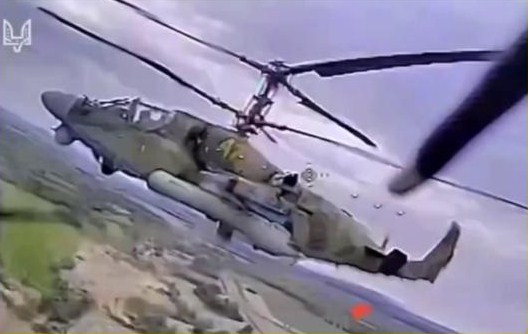
Ukrainian drone strikes Russian Ka-52 helicopter

The Ukrainian military from the Balista unit has hit a Russian Ka-52 Alligator attack helicopter.

During the attack, the tactical strike unmanned aerial system Bombus was used.

This was reported by the unit Balista on its official page on Instagram.

According to the Ukrainian military, the enemy helicopter was on combat patrol over Ukrainian territory.

25


Ukrainian special forces captured a group of occupiers The Ukrainian special operations forces have staged an unexpected raid on the rear positions of the Russian army.

view more: next ›